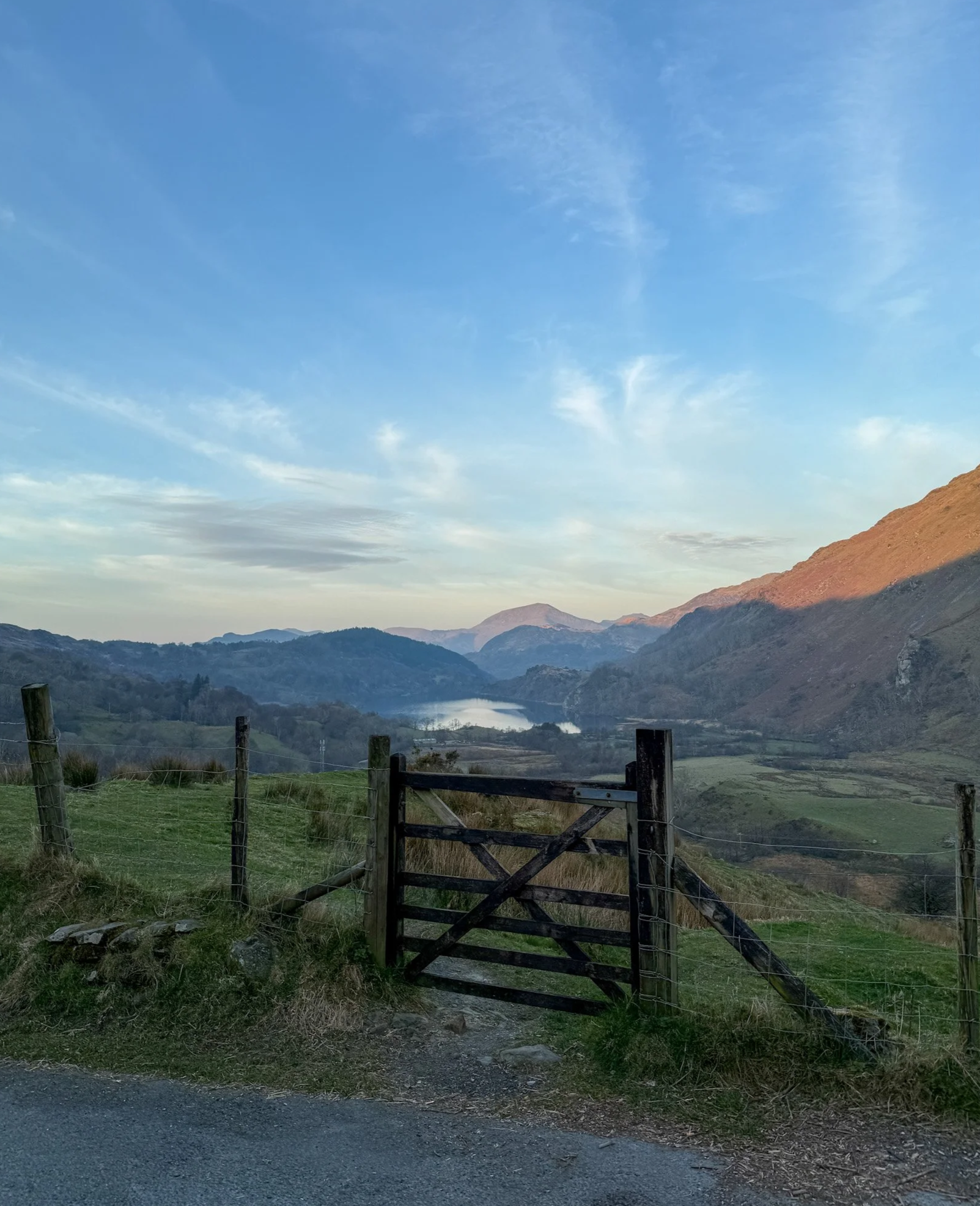
Nantgwynant valley
Nantgwynant lies in northern Snowdonia amid mountains rich in geological, biological and human history.
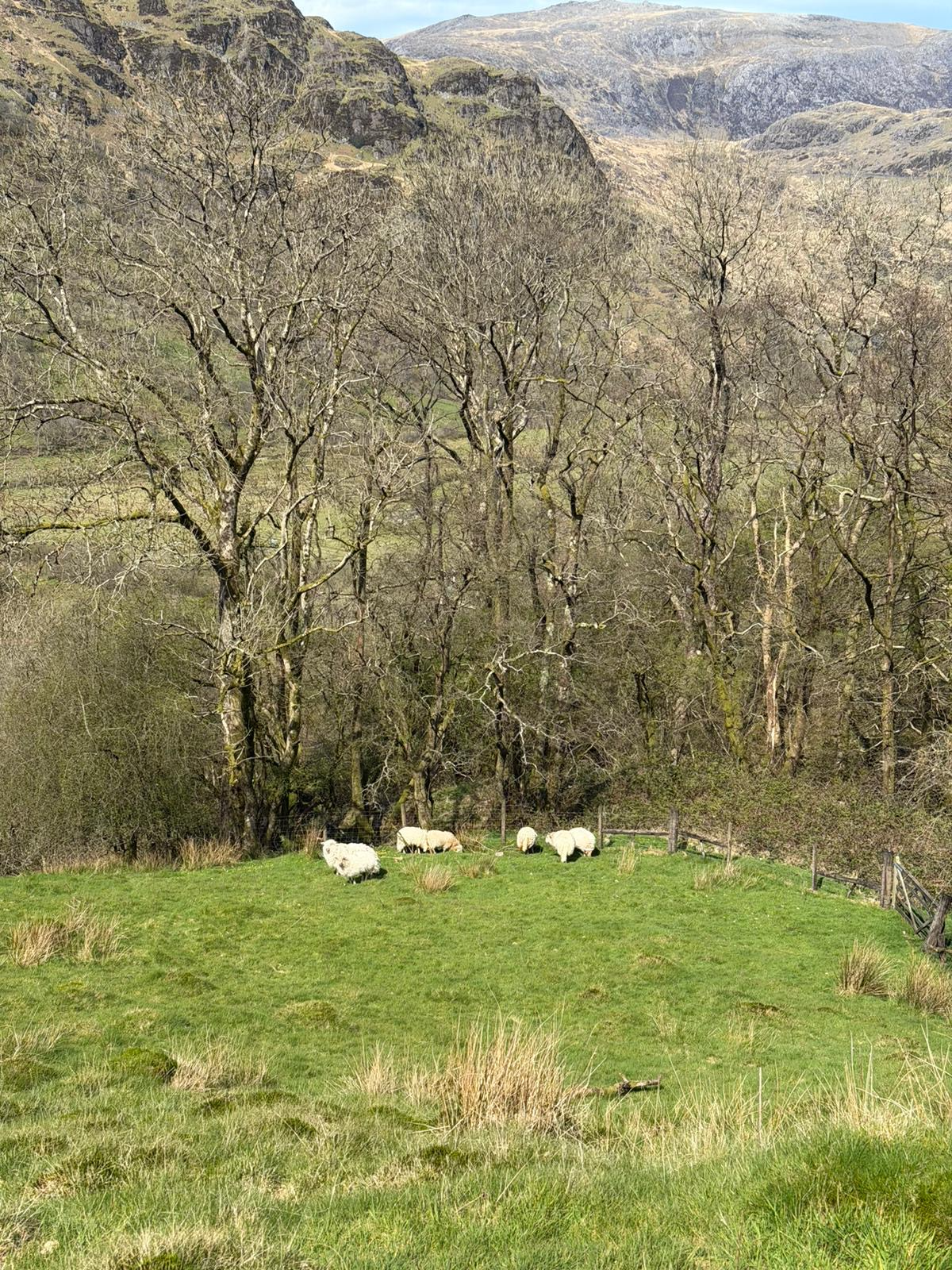
On one side of the valley is the spectacular Gallt y Wenallt, a magnificent slope that towers over the campsite. You can cross the river via the campsite’s ancient stone bridge to access nearby climbs.
Turn left onto a woodland path that takes you eventually to the Watkin Path up yr Wyddfa, and waterfalls en route. Turn right to walk up the valley to the Pyg and Miners tracks. On the other side of the lake are gentler slopes and here is the ancient Hafod Lwyfog farm, rising above the road to moorland high above. The slopes are wooded and we have planted thousands of trees to restore the ancient woodland.
History is everywhere here, from Merlin myths and the legends of the Mabinogian to later monasteries and farms. There are many wonderful places to explore.
Exploring the valley
The landscape and wildlife of this area developed during and after the glacial periods, more than ten thousand years ago. The retreating glaciers carved out the valley and eventually oak woodland developed.
The area has been occupied since ancient times, with the woodland a source of fuel, charcoal, tannin from bark for preserving leather and other raw materials. Cleared land was turned into farmland.
Learn more about the human and natural history of Nantgwynant valley-
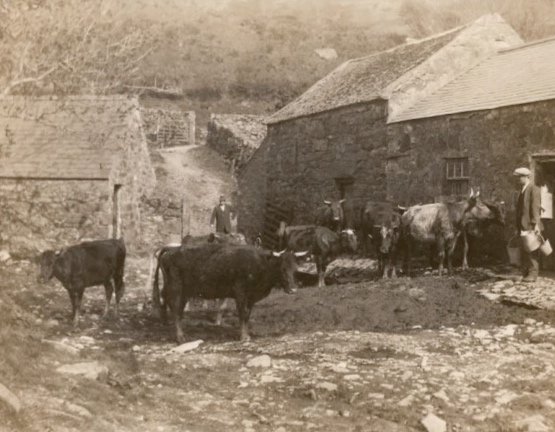
Hafod Lwyfog farm lies on the southeastern slopes of the upper part of Nantgwynant valley to the south of Eryri. The farm is 218 ha and includes flat land adjacent to Llyn Gwynant at the bottom of the farm, ranging up to mountain moorland which extends almost to the top of Cerrig Cochion.
The name Hafod Lwyfog refers to a “summer farmhouse by the place abounding in elms”. (Etymology: Haf = summer, Hafod = summer farmhouse; llwyf = elms + -og suffix for forming adjectives).
The first known reference to the present farm is 1536, as the birthplace of Sir John Williams. He went to London at an early age and became goldsmith to James I. Sir John was responsible for rebuilding the old fsrmhouse in a style somewhat grander than others in the area, but one which clearly shows this was a working farm.
The farm was bought by Sir Clough Williams-Ellis in 1936 to preserve the farmhouse and to protect the farmland from lakeside development. Around 100ha of land above the top mountain wall was donated to the National Trust in 1938, as part of Sir Clough’s on-going campaign for national parks in Britain. The entire farm now lies within the Eryri National Park.
The present owners are descendants of Sir Clough. His conservationist principles and belief that people benefit from experiencing the countryside are important factors in our farm and campsite management.
Hafod Lwyfog farm
-
Ten thousand years ago, at the end of the last ice age when the glaciers retreated, most of the uplands were covered with tundra-like vegetation. But as the climate warmed grasses, herbs and shrubs moved in. Trees were next, at first thin and scrubby but in time this primitive woodland turned into sessile oak forest. There are still stands of this ancient woodland today.
According to the SSSI designation: “The Atlantic woodlands of southern Snowdonia form one of the most important areas for woodland nature conservation in Europe”.
This is also known as “temperate rainforest” because of the damp, humid climate that supports an abundance of ferns, lichens, mosses and liverworts. The Nantgwynant area has one of the highest rainfalls in Eryri with over 2 metres of rain falling annually.
The southern parts of the farm have a thin acid soil. This is reflected in the woodland canopy that is dominated by oak and birch. The oak areas tend to have boulders with only a sparse layer of grasses, heather and bluebells.
There are also distinctive ferns, including several rare species. Moving up the valley, the underlying rock type changes and the less acidic soils support ash-alder woodland. These tend to have abundant grasses, including tufted hairgrass, creeping softgrass and ferns. There is also wood sorrel, yellow pimpernell, sedges and creeping buttercup.
Extensive planting has taken place over the last few decades to restore and protect the woodlands near the valley floor, and also the mosaic of different grasses on the moorlands above. Cattle have become favoured rather than sheep, to help restore the land from over grazing.
-
Badger
Badger [Mochyn daear](Meles meles): There are several badger burrows, known as setts, very close to the campsite and you often see them on the site at night. Tunnels are typically 10-20 metres long but can be over 100 metres, and badgers may excavate as much as 25 tonnes of soil when digging them. Badgers live in family groups or “clans”. They often dig the grass up hunting for food, mainly earthworms, but they will also eat beetles and other invertebrates, nuts, berries, roots, bulbs, small mammals and birds and carrion. The Welsh name means “earth pig”.
Red fox
Red Fox [Cadno](Vulpes vulpes): Foxes are common on the campsite and we do not support local fox hunting (which is undertaken here from vans and pickups!). These animals live in small family groups – we once had a family living under our old campsite reception. They will kill weak or premature lambs in the spring.
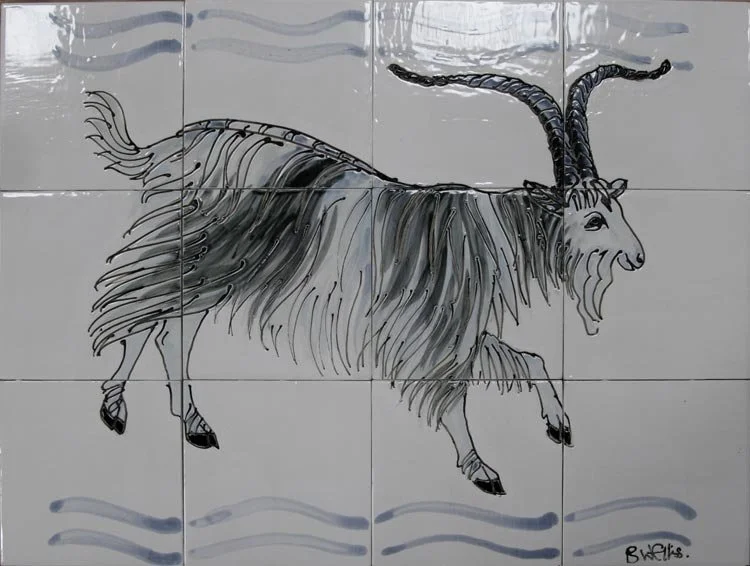
Welsh mountain goat
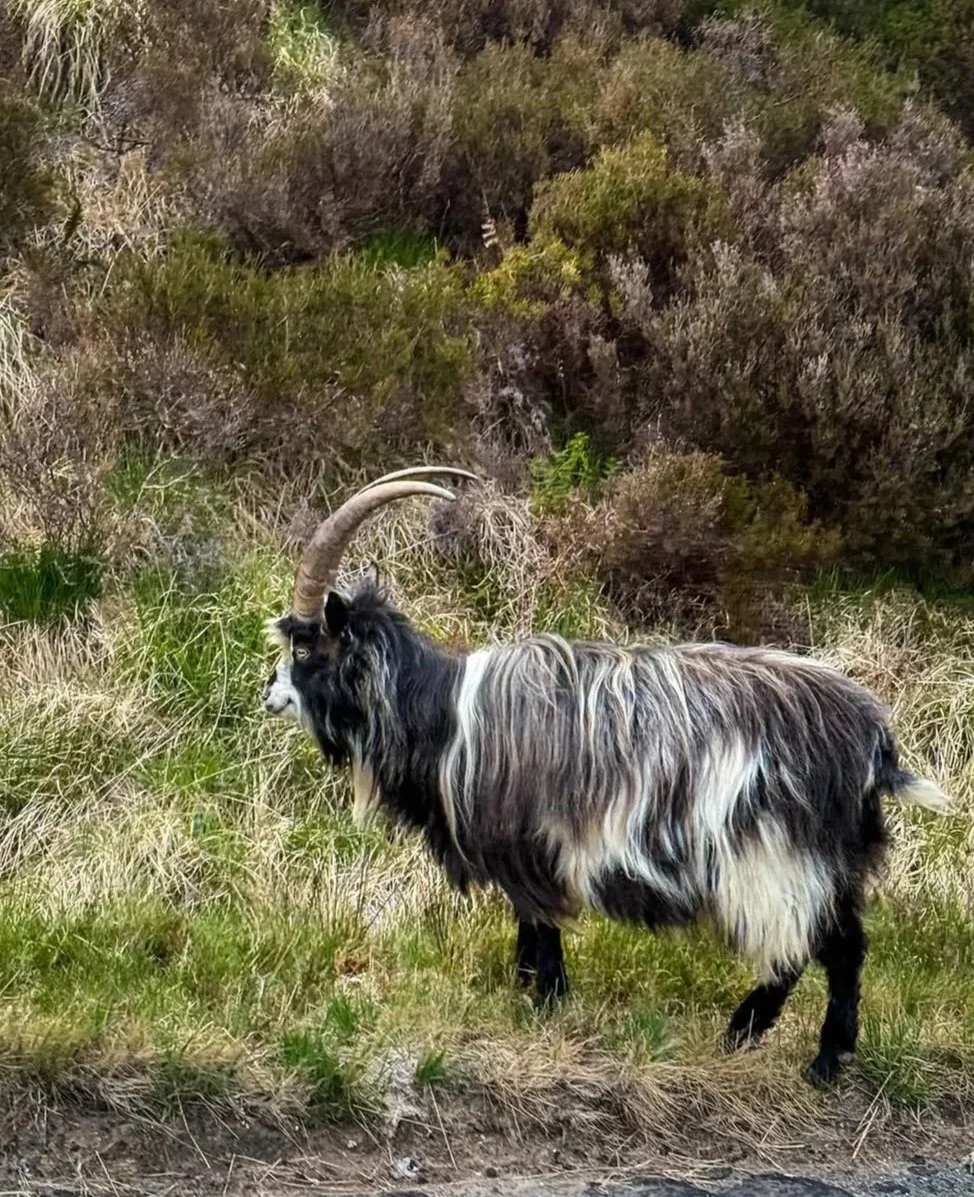
Welsh mountain goat [Gafr wyllt] (Capra hircus):The feral goats move in extended family groups up and down the Nantgwynant valley. These locals are distinguished by their horns which emerge close together and straight, before branching out. Often seen on the opposite shore of the river Afon Glaslyn at the side of the campsite.
Polecat
Polecat (Mustela putorius) is a kind of weasel, less territorial than other such mustelids, but can give out a smelly fluid when disturbed!
Hedgehog
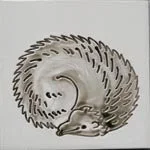
Hedgehog [Draenog](Erineus europaeus): These spiny creatures, whose 5-6,000 spines are actually modified hairs, are common and apparently have changed little over the last 15 million years. Their method of defence is to roll into a tight ball, serving them well against animal predators but proving a disastrous strategy when faced with an oncoming car. They are evidently a good cure for madness, as cited some 300 years ago- “For a lunatic. Take a hedge-hog and make broth of him, and let the patient eat of the broth and flesh.” So if you’re feeling slightly mad…
Field vole
Short-tailed (Field) vole [Llygoden bengron y gwair](Microtus agrestis): These creatures are widespread in wood and farmland- in fact, although secretive and rarely seen, they are probably Britain’s commonest mammal with an estimated population of 75 million. They breed three times from March to October and live only four and a half months, so die after their last reproduction. Originally called “vole-mice”, the name cames from the Norwegian vollmus, meaning “field mouse”.
Rabbit
Rabbit [Cwningen](Oryctolagus cuniculus): These animals live in family groups in burrows, and are occasionally seen on the campsite. Rabbits feed by grazing on grass and leafy weeds. We currently have far too many at the campsite!
Adder
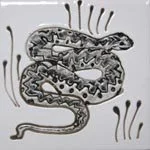
Adder: a common and venomous snake that is not however considered dangerous as it bites only when disturbed, for example when trodden on. So walk carefully in our grass!
Bat
Long-eared bat [Ystlum hirglust](Plecotus auritus): This relatively slow-flying bat prefers caves as roosting sites in the winter, but summer breeding roosts are found in trees holes, buildings and bat boxes . The roosts in trees may be close to the ground. The ears can be almost as long as the body, and enable the bat to distinguish insects on leaves by echolocation. Thus unlike most other British bats, it often feeds by hovering amongst tree branches and plucking insects off leaves, rather than in flight.
Grey squirrel
Grey squirrel an immigrant from North America, this has taken over from the native red squirrel which is no longer seen.
Weasel
Weasel [Bronwen](Mustela nivalis): It is thought that the name “weasel” comes from the Anglo-Saxon root “weatsop” meaning “a vicious bloodthirsty animal”. Weasel eat small animals, have long bodies and short legs.
-
Grey heron
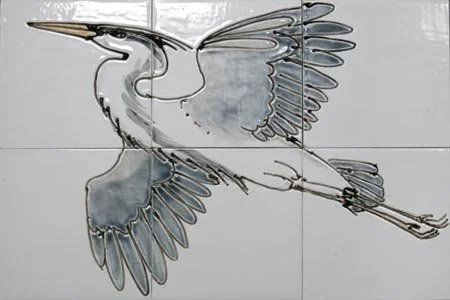
Grey heron [Crëyr glas](Ardea cinerea): This wading bird is often at the campsite, standing on the lake shore or flying overhead.They feed in shallow water, catching fish, frogs, and insects with its long bill. In folklore it was believed that the scent of a heron’s foot attracted fish so that they could then be caught, and fishing lines were sometimes rubbed with various preparations accordingly. In Shakespeare’s time hunting herons with peregrine falcons was a popular sport, and they appeared on the menu at banquets.
Barn owl
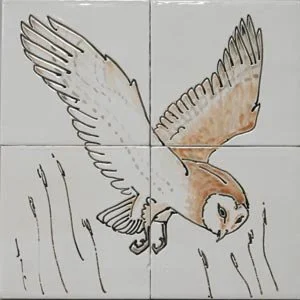
[Tylluan Wen](Tyto alba): These are one of the most widespread, though not common, of all birds worldwide, and you may see them flying at night across open fields, including over the campsite. They appear like a ghostly will-o’-th’-wisp as they fly past at night because of their white underparts and silent floating flight. Barn Owls declined considerably in Britain during the 1960s due particularly to the accumulation of rodent poisons in their bodies, but have since recovered.
Buzzard
Buzzard [Bwncath] (Buteo buteo): The soaring flight of a buzzard, with its wings tilted up in a distinctive shallow “v” and its mewing call, is very evocative. This large now common bird is most typically seen circling high above the valley, or sitting on fence posts watching for food. They feed on insects, lizards, worms, small mammals and carrion. Typically other birds, even swallows may gather together to mob buzzards and drive them off. Nests are bulky and messy in trees and contain 2 or 3 nestlings. Once common throughout Britain, persecution during the 19th century restricted them to the north and west. Since the 1960s however, legal protection and the cessation of organochlorine pesticide use has resulted in their spread back into former haunts, so that they are now Britain’s commonest and most widespread bird of prey.
Osprey
Osprey [Gwalch y pysgod](Pandion haliaetus): This large endangered “fish eagle” became extinct in Britain in 1916, but recolonised Scotland in 1954. It now has a local breeding site at Prenteg, near Tremadog where there is a viewing hide- one of just two current breeding sites in Wales. Ospreys feed on fish, sometimes heavier than themselves, and can spot a fish near the surface from from 70 metres up in the air. British birds migrate to West Africa for the winter.
Red kite
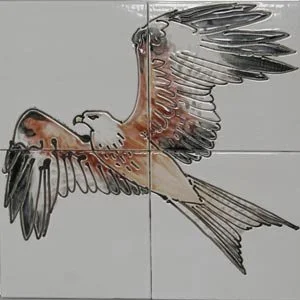
Red kite [Barcud coch](Milvus milvus): 200 years ago kites were common over much of Britain, but by the 1930s persecution and habitat changes had restricted them to a last refuge in mid-Wales, where less than 20 birds survived. This small population clung on until the 1980s and then started to increase and spread thanks to conservation efforts, so that by 2000 there were about 260 pairs in Wales. The Red Kite has thus become a symbol of Welsh wildlife and, in 2007, was voted Wales’ favourite bird, although it has now also been introduced in England and Scotland. This bird of prey is primarily a scavenger feeding on carrion, but will also take mice and voles and shrews, and in Spring also earthworms. You see them circling locally with their distinctive forked tail. They are not migratory in this part of the world.
Chough
Chough [Brân goesgoch](Pyrrhocorax pyrrhocorax):This rare and charismatic red-billed bird is related to the crow. They pair for life and are not migratory. Found mainly on coastal cliffs and grassland, the handful of pairs breeding in Snowdonia are one of the few inland colonies. According to legend King Arthur turned into a chough on his death, and will rise again when the Chough returns to breed in Cornwall. They did so in 2001…watch this space!
Grey wagtail
Grey wagtail [Siglen Llwyd](Motacilla cinerea): These handsome birds, unlike yellow wagtails with which they are sometimes confused, have the yellow restricted to the undersides and have a slatey-grey back. Breeding males have a black throat. They can be seen feeding on insects along fast-flowing stoney rivers and streams.
Nuthatch
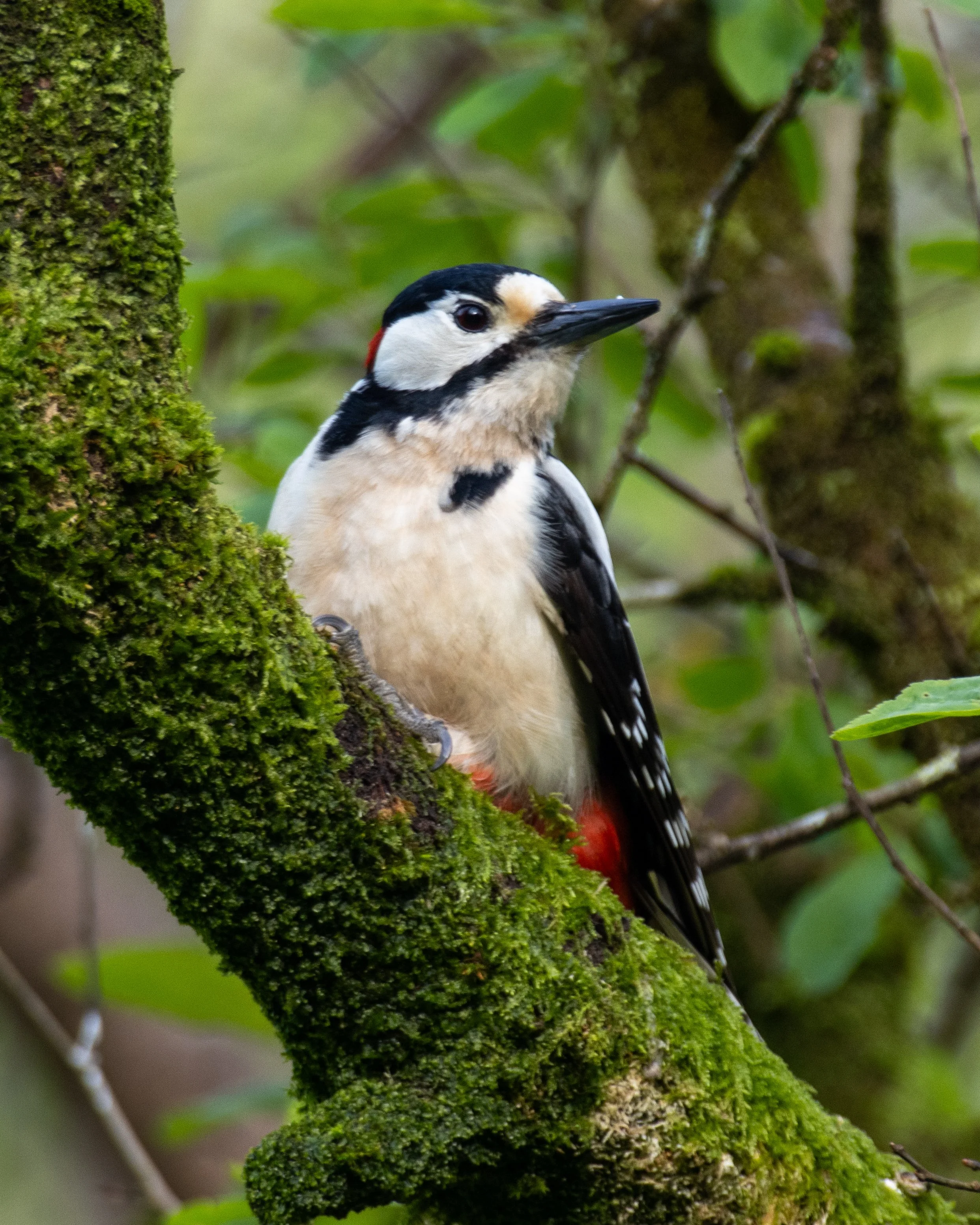
Nuthatch [Delor y cnau](Sitta europaea): Characterised by large heads, short tails, and powerful bills and feet, nuthatches advertise their territory using a loud, rattling trill. They eat insects, nuts and seeds, jamming nuts into crevices and cracking them with blows of their beak. It is the only British bird that can climb down tree trunks (woodpeckers and treecreepers only climb up). The nest is built in a hole in a tree, and the entrance is reduced to exclude predators by the birds building a rim of mud around the margins of the hole until it is reduced to the right diameter.
Swallow
Swallow [Gwennol](Hirundo rustica): Swallows breed right across the northern hemisphere and we have many on the campsite including breeding pairs that think our toilet block is a great place to raise a family! Swallows are excellent flyers and feed on the wing, migrating to southern Africa for the winter- though as late as the 19th century swallows were widely thought to hibernate in the bottom of ponds. Pairs of mated swallows are monogamous and nest close to where they themselves were raised. In legend the swallow is reputed to have brought fire to man, burning its chest red in the process.
Raven
Raven [Cigfran](Corvus corax): These are the most common of the corvids locally, and are often on the campsite– in fact their population in north-west Wales has almost trebled since about 1950. Ravens live 10 – 15 years, occasionally up to 40, are omnivorous and intelligent. They live high up Snowdon and surrounding hills… and like our rubbish bins.
Redstart
Redstart [Tingoch](Phoenicurus phoenicurus): These insect-eating birds are summer visitors from Africa, and the upland oakwoods of western Britain are one of their favoured habitats. The males are colourful with a slate-grey back, red underparts, black bib and white forehead; the females are brown. Both male and female have a red tail, giving rise to its name (from Old English stert for tail).
Woodlands and wildlife
We celebrate our Llyn Gwynant wildlife in beautiful hand-painted tiles displayed around our campsite reception and toilet block, as well as in Y Bragdy, the brewery and in Llyn Gwynant Barns . These are the work of Bronwyn Williams-Ellis R.A., one of the most talented tile-makers in the UK. You can see other examples of her work on www.handmade-tiles.co.uk.
Red fox
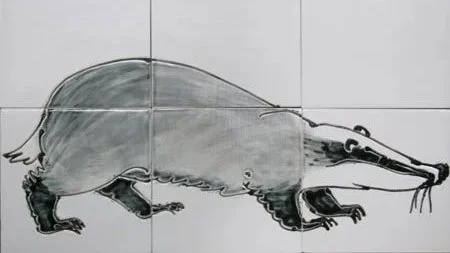
Badger
Grey heron
Hedgehog
Adder
Barn owl
Welsh mountain goat
Red kite