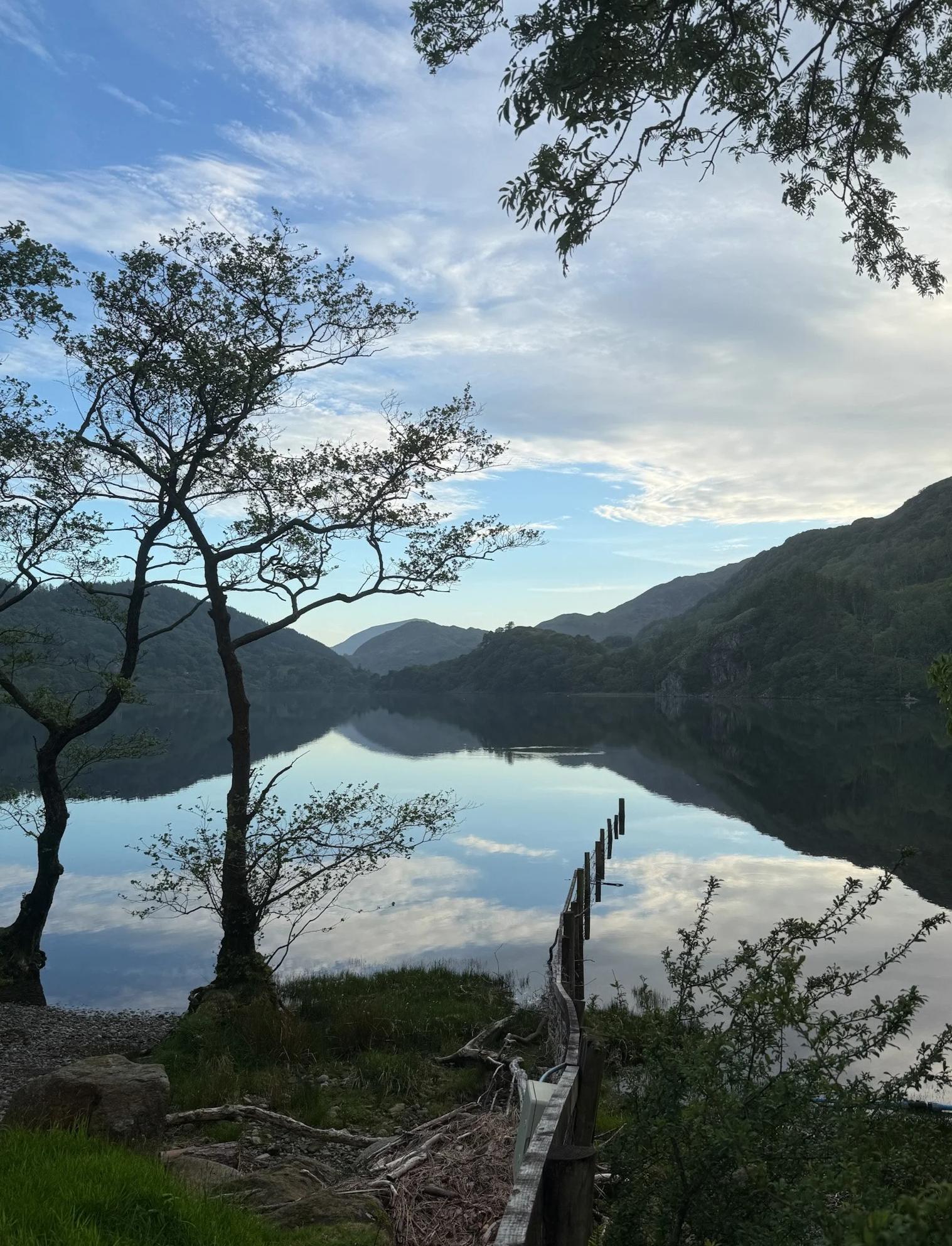
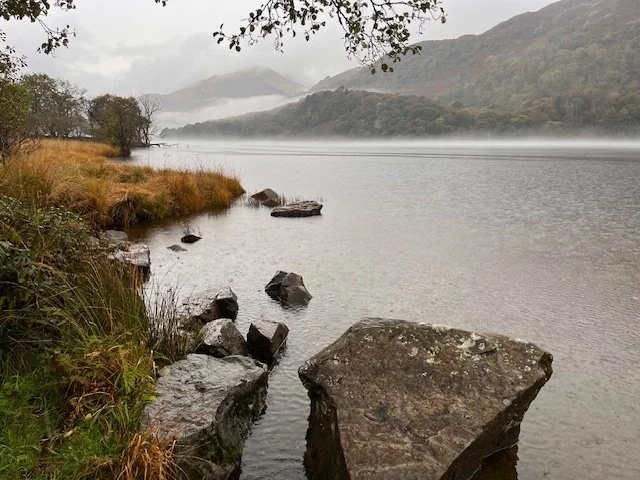
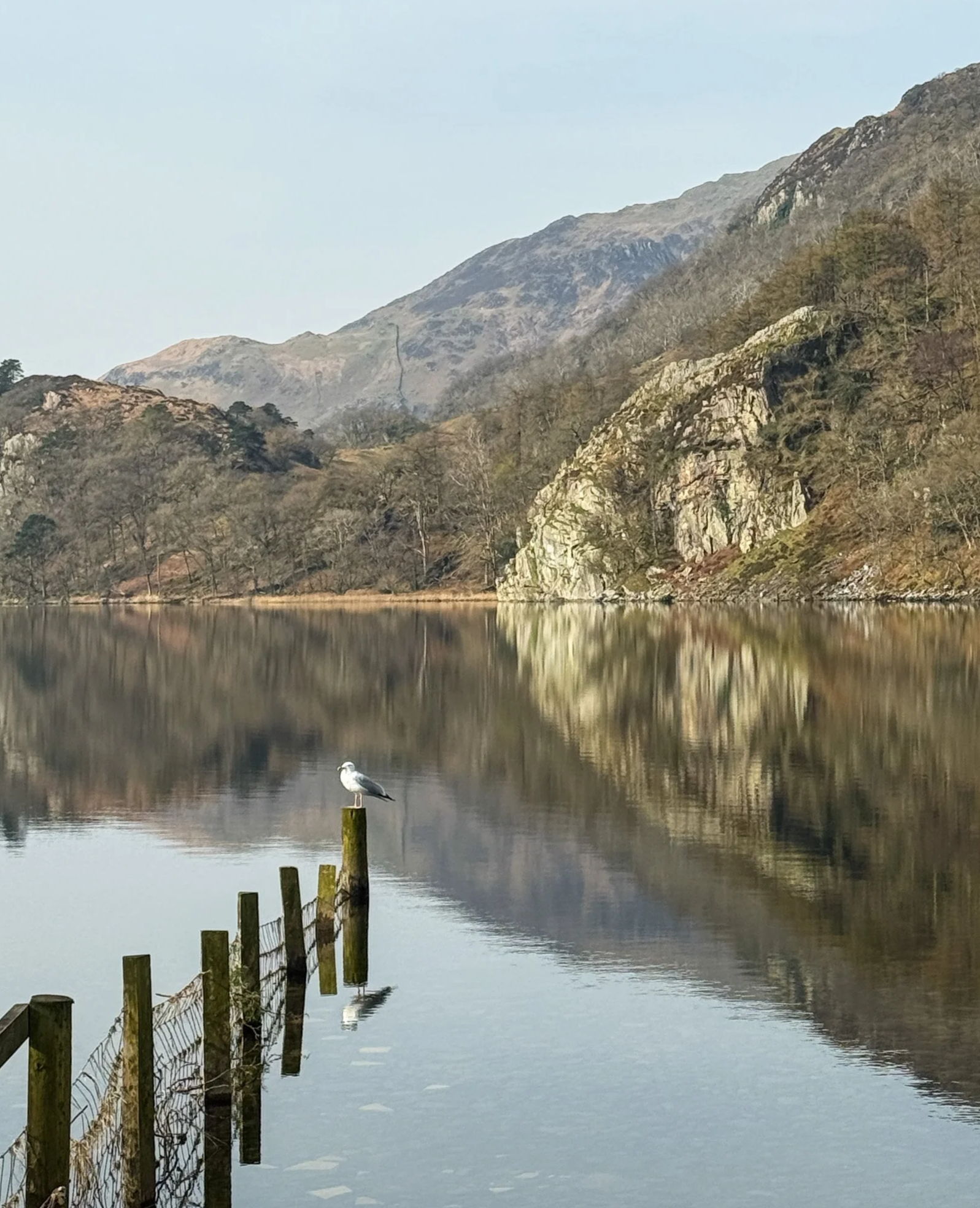
A lake with soul
Dragonflies, frogs and eels live here as the lake is not just for people to enjoy but for other creatures too: salmon come to spawn and otters have been seen in the lake waters.
Afon Glaslyn, the river which marks the western boundary of the campsite, rises in Llyn Glaslyn on the flanks of Eryri, bypassing Pen Y Pass then flows into Llyn Gwynant and on to Beddgelert, merging with the Afon Colwyn, then tumbling through the dramatic Aberglasyn Pass and down to Porthmadog and into the sea.
Motorized craft, including boats with outboard motors, are not allowed on the lake. Fishing too is strictly prohibited as the lake is not stocked and some fish species are endangered. We leave them for other wildlife, for otters and herons. Those who want to fish should visit Eisteddfa Fisheries near Criccieth.
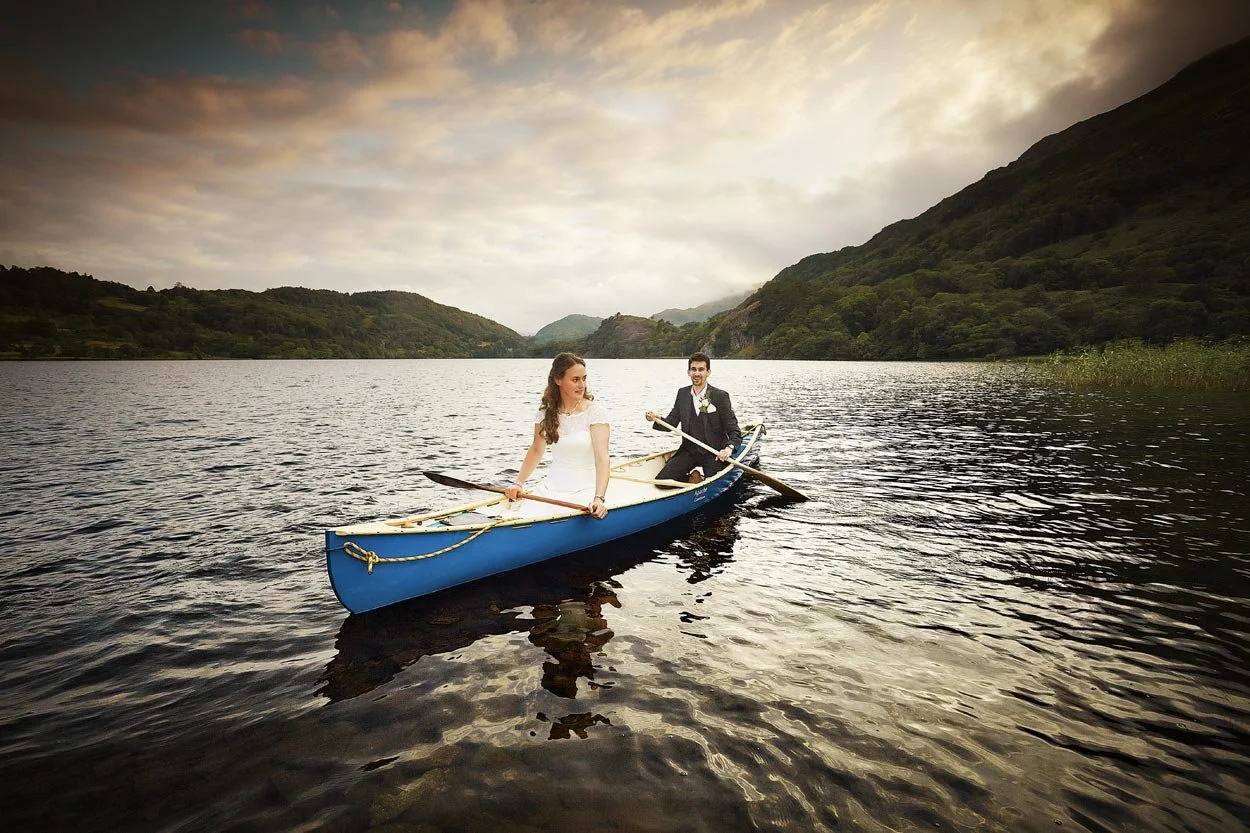
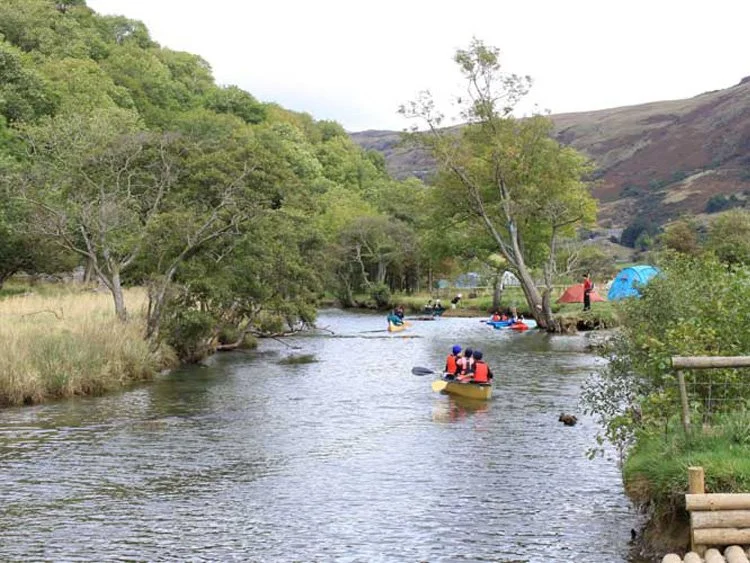
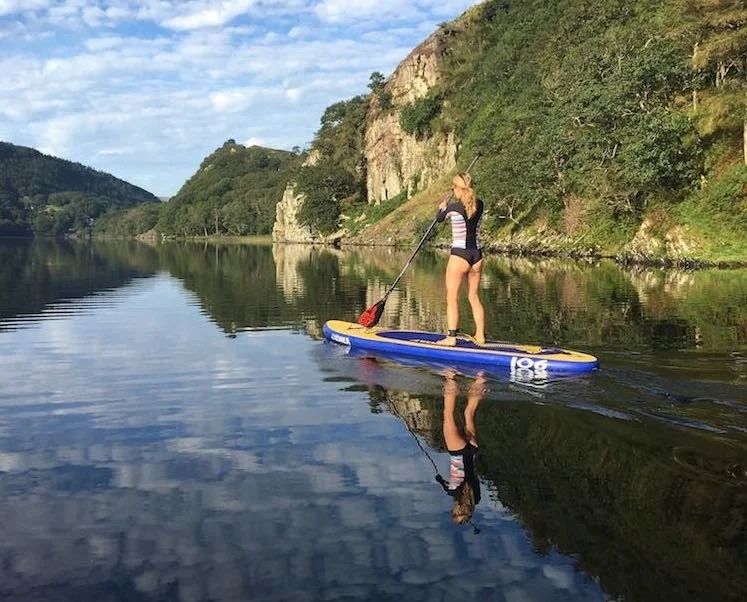
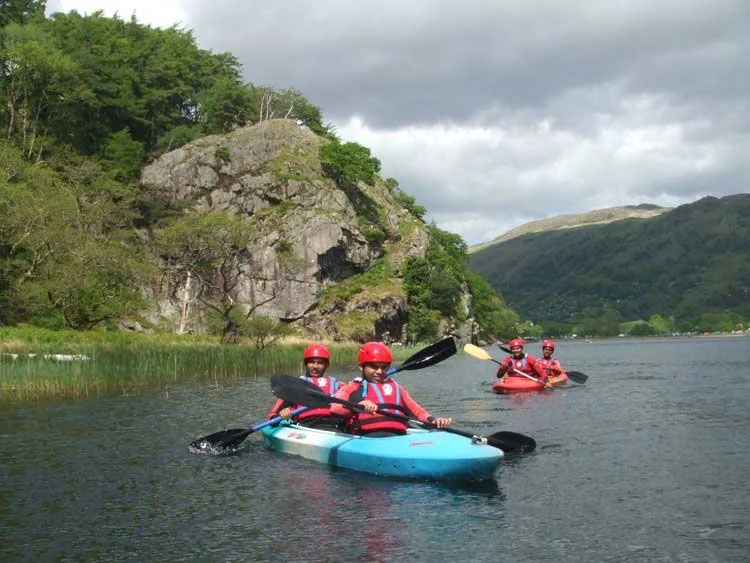
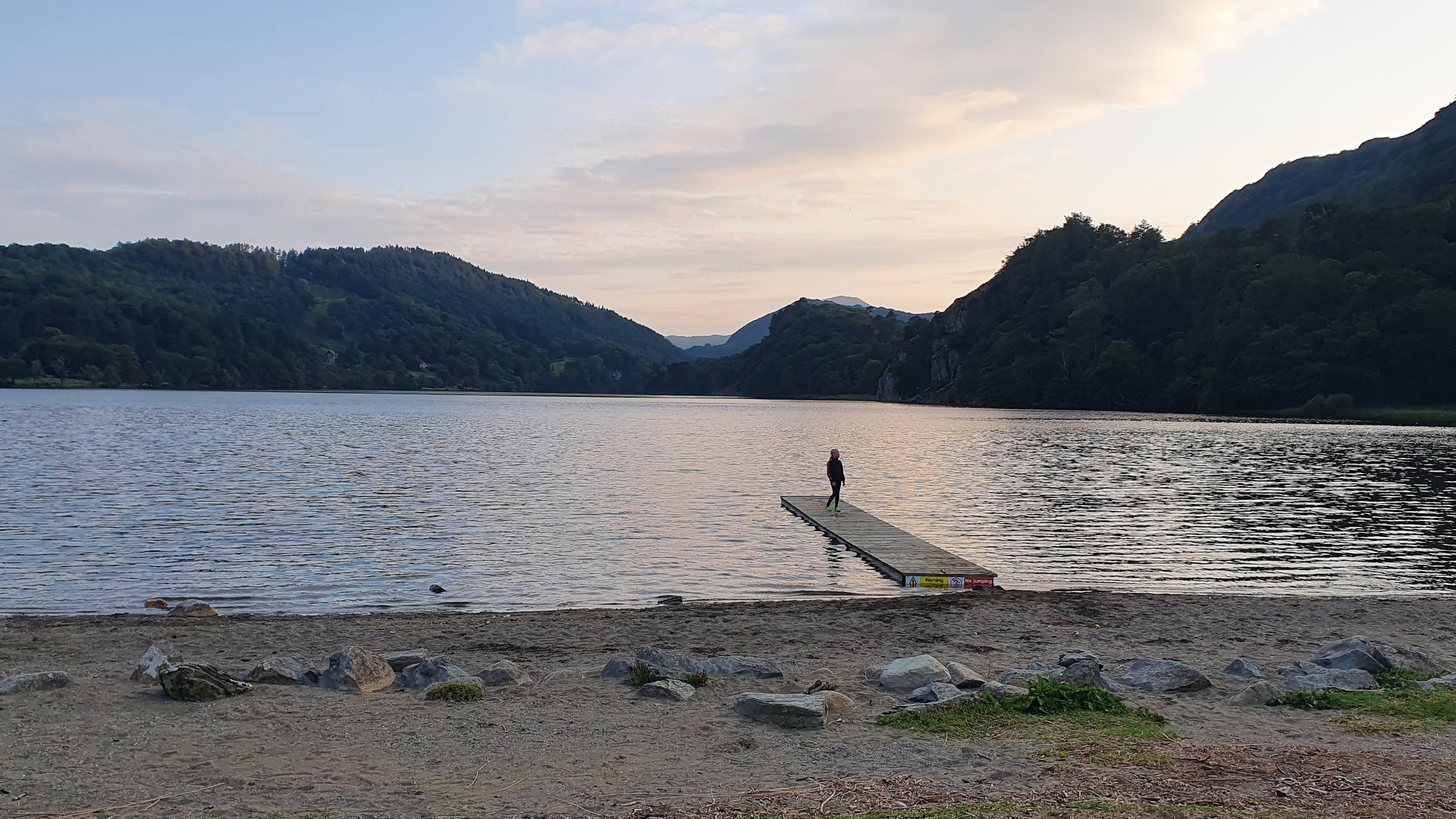
Enjoy wild swimming and you can also explore these waters by canoe, kayak or paddleboards – campers may either bring their own or use our boat hire at the riverside, see details here.
Underwater in Llyn Gwynant
Llyn Gwynant is one of the larger lakes in the area, and is noted for being rather deep with very cold currents at times. We were interested to know more about its ecology and also of course the water quality, especially as it is so near the campsite. We were therefore keen to help a local diving group who undertook some investigations of the lake in 2012.
-
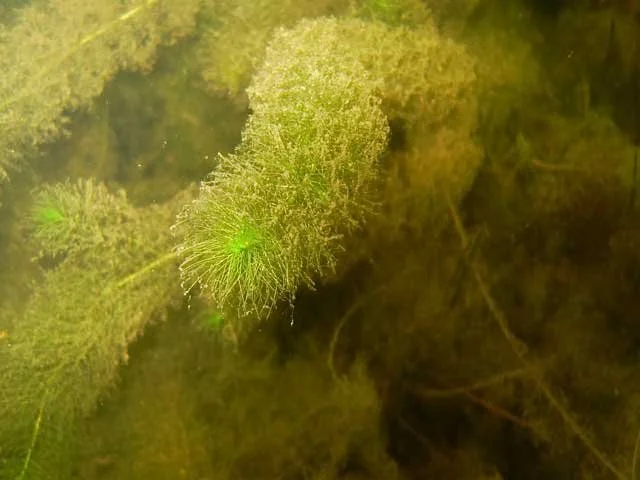
“We had a successful dive on Sunday 24th June from the little gravel beach by the road – thanks for your and your staff’s friendly support. 6 of us took bearings across the lake in 3 pairs. 1 pair headed across to Elephant Rock and recorded a depth of 12m. The other 2 pairs remained in the shallower waters which extend quite a long way across from the beach, and contain abundant weed beds. There seems to be a very clear cutoff depth of about 5m after which there is very little weed.”
The photos courtesy Carol and Liz Healey, include: alternate water milfoil, Myriophyllum alterniflorum, a common species that has been lost from some upland lakes due to the effects of acid rain; shoreweedLittorella uniflora, a common plant of stony margins in Snowdonia lakes, freshwater sponges belonging to class Demospongiae, which filter large volumes of water removing food particles and water beetle, Veliidae-sp possibly Microveli.
-
Salmon
Salmon/Eog mor iwerig (Salmo salar): Local Atlantic Salmon are born and spend the first one to four years of their lifes in freshwater before migrating out to sea for a further one to four years, mainly off the west coast of Greenland. They then return to the river of their birth to spawn, guided probably by the distinctive chemical “scent” of that river. They used to be abundant in the small streams leading into Afon Glaslyn around the campsite. The first laws protecting salmon were issued by Edward I over 700 years ago.
Sewin
Sewin/Sewen (Salmo trutta trutta),or Sea Trout, are a migratory form of the resident brown trout which, like salmon, have developed the habit of heading out to sea as young adults and returning to rivers to spawn. The majority of Welsh Sewin are female, and will interbreed with Brown Trout. The silver-coloured Sewin is highly prized by anglers and traditionally fished for by night. It is claimed that the Sewin was the last of the fish created by God, producing perfection through practice! There are currently concerns that Sewin may be declining in Wales.
Arctic charr
Arctic charr/Torgoch yr arctig (Salvelinus alpinus): This is one of the rarest fish in Britain and is at threat of extinction. This ancient relative of salmon and trout is found only in deep, cold glacial lakes and is the most northerly-occuring freshwater fish in the world. There is also a population in Llyn Padarn at Llanberis. A serious scientific body called the International Society of Arctic Charr Fanatics, ISACF, is dedicated to the study of this beautiful fish. They meet every two years in different countries to discuss Arctic Charr research and conservation.
Brown trout
Brown trout/Brithyll (Salmo trutta fario): The brown trout is a freshwater fish that inhabits local rivers and lakes. Although not endangered, fish numbers locally are under stress. In early winter the female creates a hollow (or “redd”) in gravel on the riverbed with her tailfin, in which she lays up to 1500 eggs. Trout require cool, unpolluted and well-oxygenated water.
Eel
Eel/Llysywen (Anguilla anguilla): Eels are quite extraordinary fish. They are thought to spawn in the Sargasso Sea south of Bermuda. The transparent larvae, just 1–5cm long, drift some 6000 km across the Atlantic on ocean currents to reach Britain and other parts of Europe. On entering freshwater they metamorphose into young eels and, after spending between five to 20 years in rivers such as you might see locally, they make the return migration to the Sargasso sea to breed and die. Eels are critically endangered – in the last 25 years their numbers are thought to have declined by around 95 per cent.
Stickleback
The three-spined stickleback/Welsh name? (Gasterosteus aculeatus) is a fish native to most inland coastal waters north of 30°N. It has long been a subject of scientific study for many reasons. It shows great morphological variation throughout its range, ideal for questions about evolution and population genetics. Most populations are anadromous (they live in seawater but breed in fresh or brackish water) and very tolerant of changes in salinity, a subject of interest to physiologists. The stickleback lives only in the Northern Hemisphere and usually inhabit scoastal waters or freshwater bodies. It can live in either fresh, brackish, or salt water. It prefers slow-flowing water with areas of emerging vegetation. It can be found in ditches, ponds, lakes, backwaters, quiet rivers, sheltered bays, marshes,and harbours.
The fish of Llyn Gwynant
-
Otter
Otter/Dyfrgi (Lutra lutra): These long slender creatures were recently in severe decline locally, but we have increasingly seen them at the river’s edge near the stone bridge. Their populations have in fact recovered across Britain in recent years as a result of improvements in river quality. There is some evidence that, where otters have returned, populations of the endangered water vole have also increased as a result of otters driving out their main predator, the introduced american mink. Otters live primarily on fish.
Frog
Frog/Broga (Rana temporaria): Frogs have permeable skin and like to live in damp places, and so can commonly be found in this area. The expression “frog in the throat” alludes to the croaking call, but also has a more literal interpretation, as eating a live frog was often recommended for whooping cough. Frogs can live up to eight years, but recently they have been increasingly affected by fungal infections, thought to be the result of global warming. This is threatening the global extinction of a number of frog species worldwide.
Common toad
Common toad/Llyffant dafadennog (Bufo bufo): These widespread amphibians are most active in wet weather and are frequently found at the campsite and in the woodland surrounding it. The adults stay on land though the females lay eggs in water, preferring deeper ponds than frogs. Glands on the skin secrete a poison which deters would-be predators. In 1859 the naturalist Francis Buckland wrote “a man once made a wager, when half drunk in a village public-house, that he would bite a toad’s head off; and he did so, but in a few hours his lips, tongue and throat began to swell in a most alarming way, and he was dangerously ill for some time.”
Dragonfly
Dragonflies Welsh name? are insects in the sub-order Anisoptera (meaning ”unequal-winged”). Hind wings are usually shorter and broader than the fore wings. They are usually large, strongly flying insects that can often be found flying well away from water. When at rest, they hold their wings out from the body, often at right angles to it. The eyes are very large and usually touch, at least at a point. The larvae have no external lamellae. You see many of these glorious insects on the lake shore.
Water-loving animals
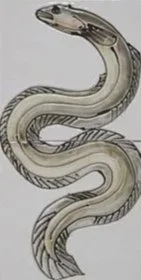
We celebrate our Llyn Gwynant wildlife in beautiful hand-painted tiles displayed around our campsite reception and toilet block, as well as in Y Bragdy, the brewery and in Llyn Gwynant Barns . These are the work of Bronwyn Williams-Ellis R.A., one of the most talented tile-makers in the UK. You can see other examples of her work on www.handmade-tiles.co.uk.
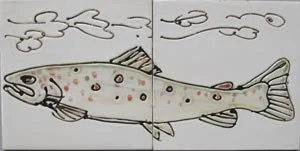
Arctic charr
Brown trout
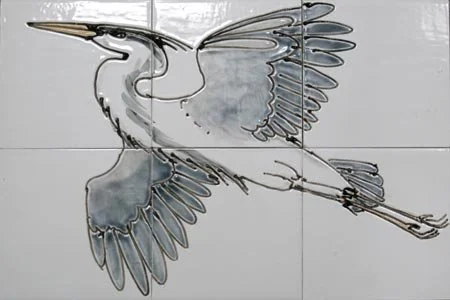
Heron
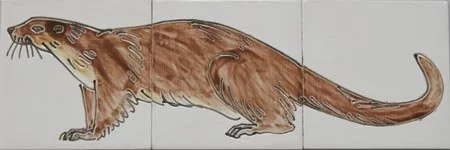
Otter
Eel
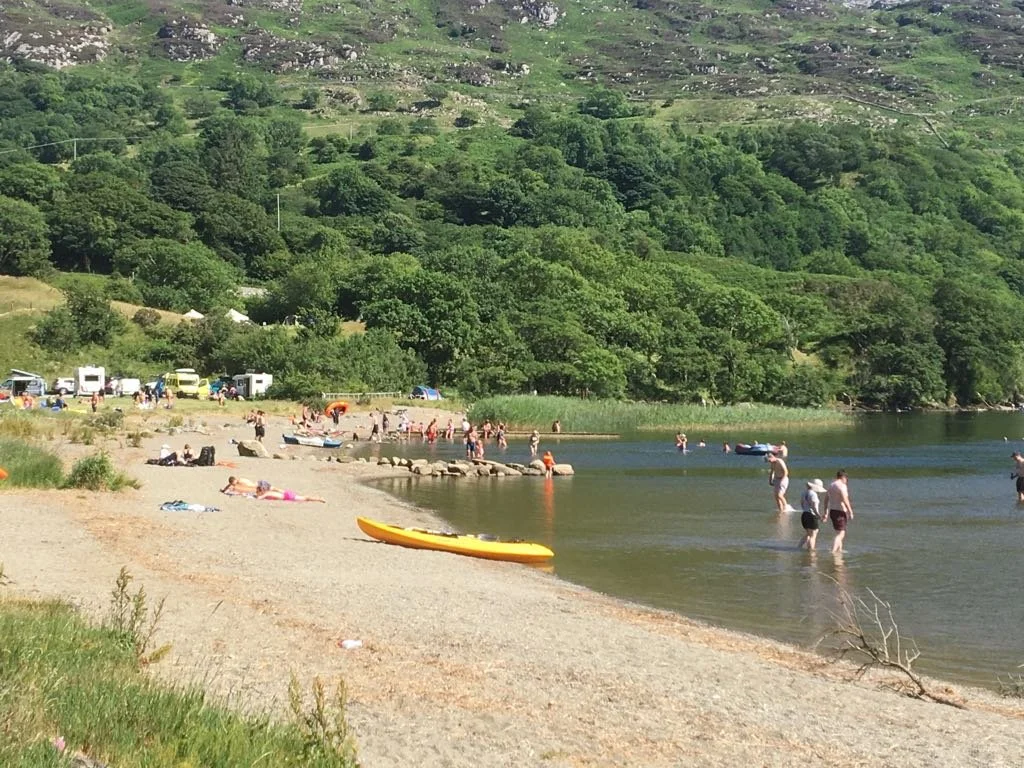
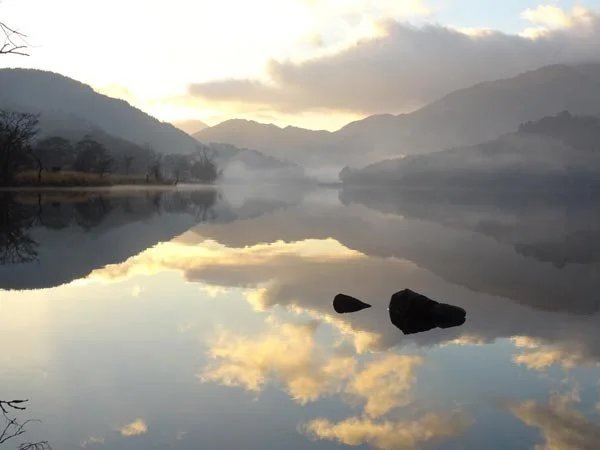
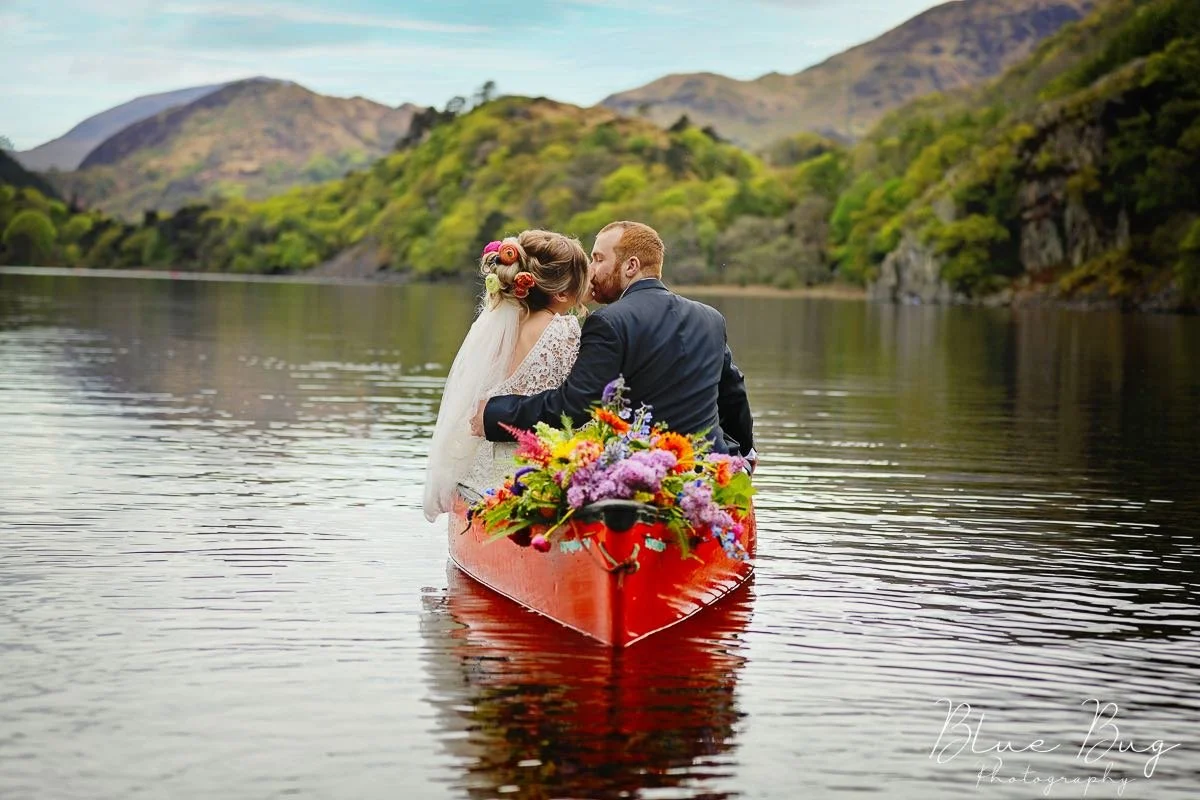
Enjoying the lake
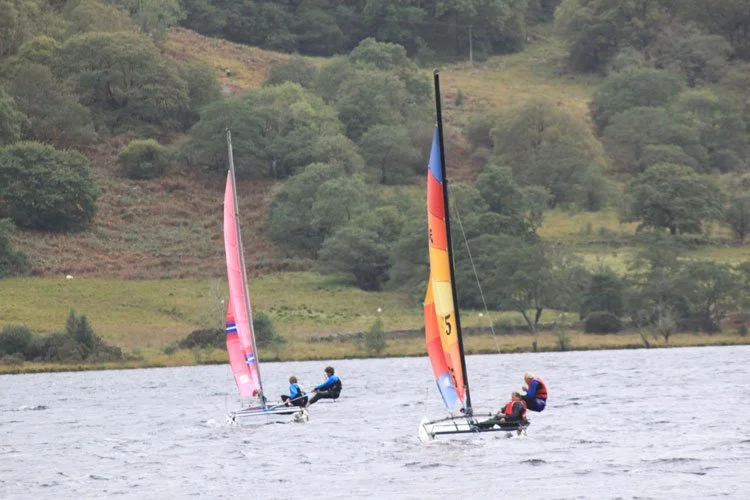
Your own kayaks, canoes, dinghies and sailboats are welcome if you are camping with us but you must bring your own lifejackets, the wearing of which is mandatory.
No power boats or motorized craft (including outboard motor) are allowed on the lake or river.
Fishing is not allowed on river or lake.
Non-campers or day visitors may launch boats from the layby for a fee.
Fee is payable at reception prior to launching:
Single boat £5
Group launch (up to 8 boats) £25
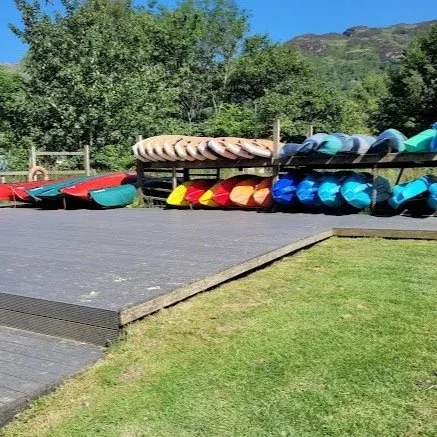
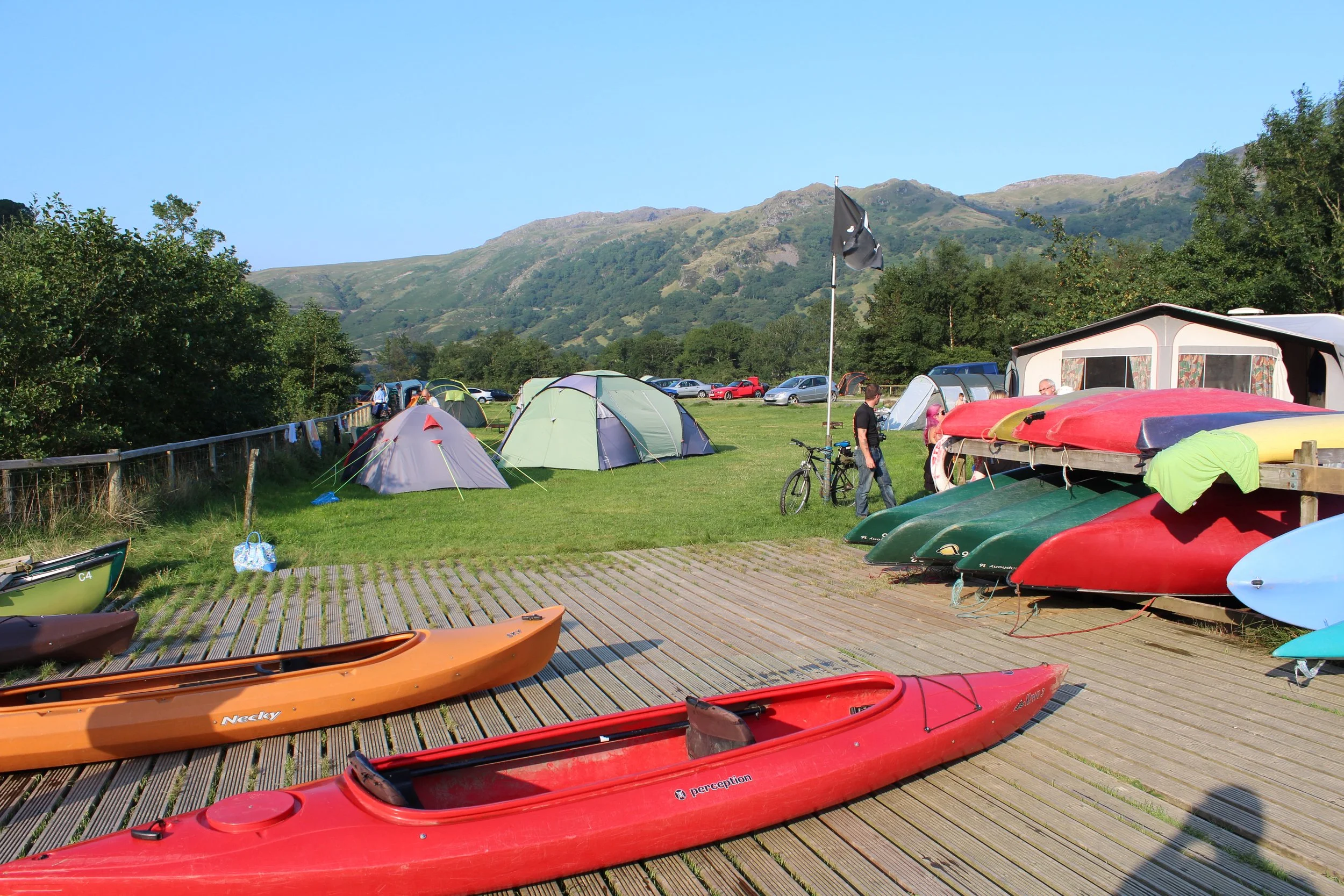
Bounded by lake and river, the campsite is ideal for paddling. We offer boat hire from Easter, every Sat and Sun 10am–6pm plus bank holiday Mondays, and every day in school holidays. Boat hire does not operate after 30 September. Please note it is not available when the weather is not suitable.
Boat hire
-
Boats cannot be booked in advance: simply go to the boat hire area, which is beside the river near the lake, to arrange hire on the day.
We do not offer instruction with boat hire.
Boats and boards are hired by the hour with buoyancy aids and paddles provided.
The boat hire is available to campers – if you are not a camper you will need to book a day visit.
A level of fitness is required for kayaking and paddling: your safety with this equipment is your responsibility
We do not hire buoyancy aids to those bringing their own boats – please make sure to bring your own as the wearing of these is mandatory.
The waters of river and lake are colder than the sea and the weather can be changeable, so clothing must be suitab. Jeans are not recommended
-
14 single kayaks (large open cockpit)
3 sit-on-tops (FatYak)
9 double kayaks
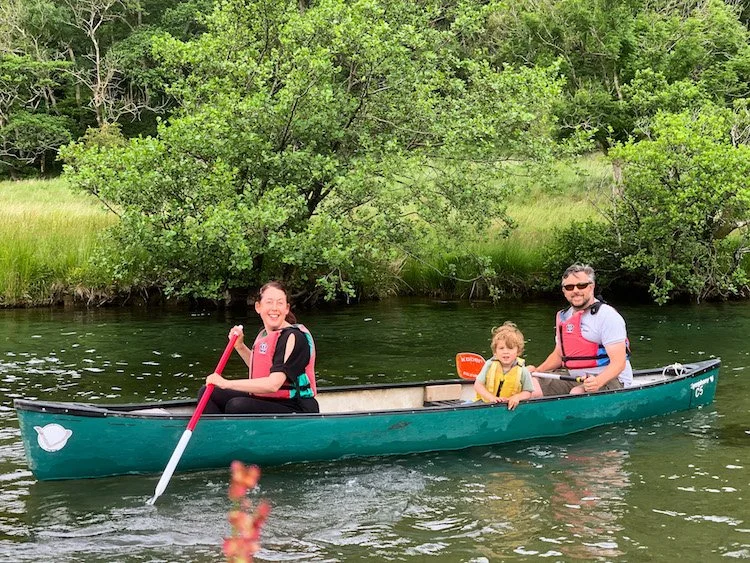
9 Canadian canoes
1 raft (2 Canadian canoes permanently rafted together)
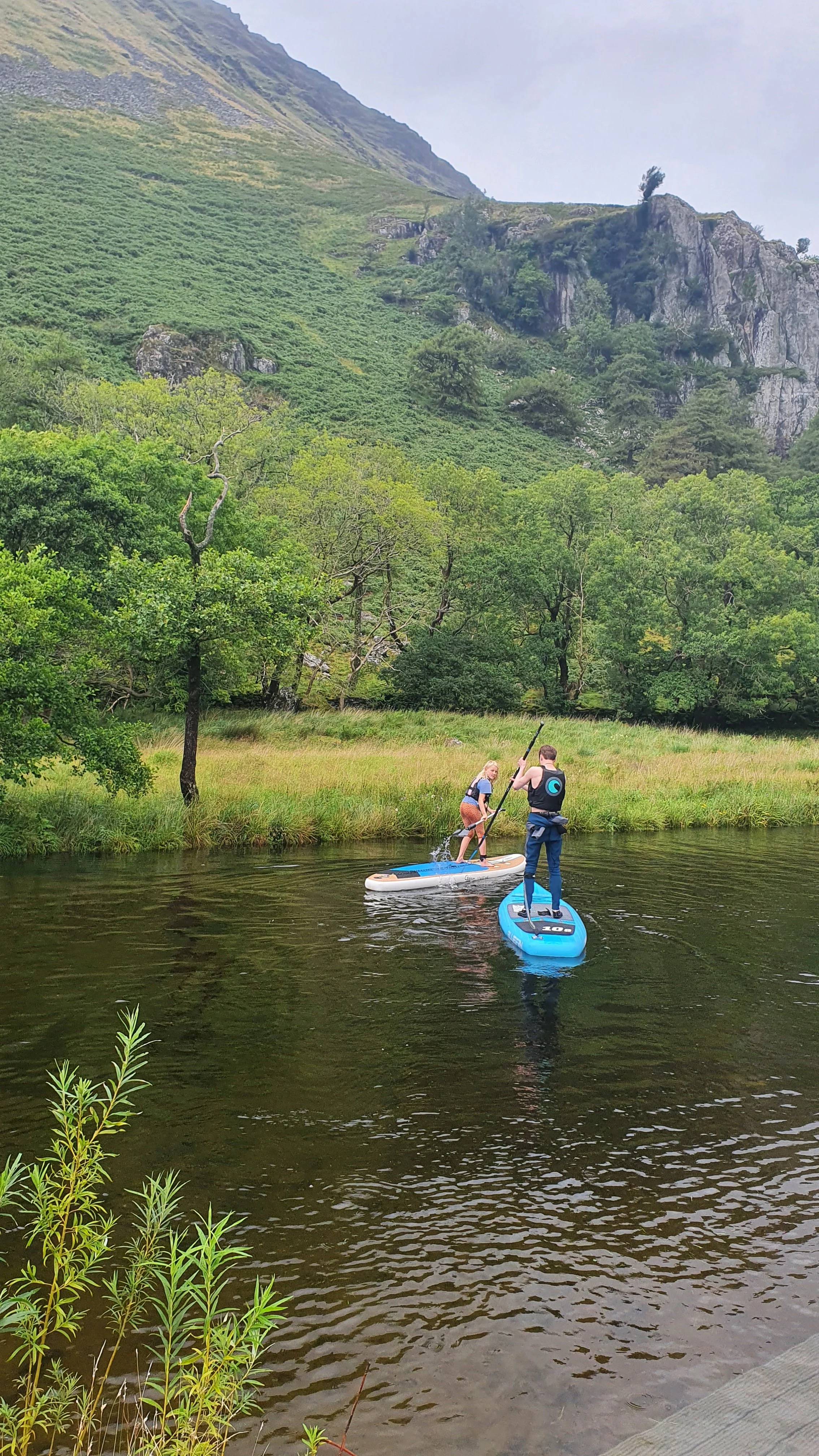
10 stand up paddle boards (SUPs)
We do not offer instruction, nor do we hire buoyancy aids without hiring our boats.
-
Charges are per hour only. All prices include buoyancy aids.
Equipment charge per hour
Single kayak - £7
Double kayak - £14
Canadian canoe - £20 (takes 3 adults or 2 adults plus 2 children)
Canadians rafted - £30 (2 Canadian canoes rafted together)
Paddle board - £10