Environmental progress
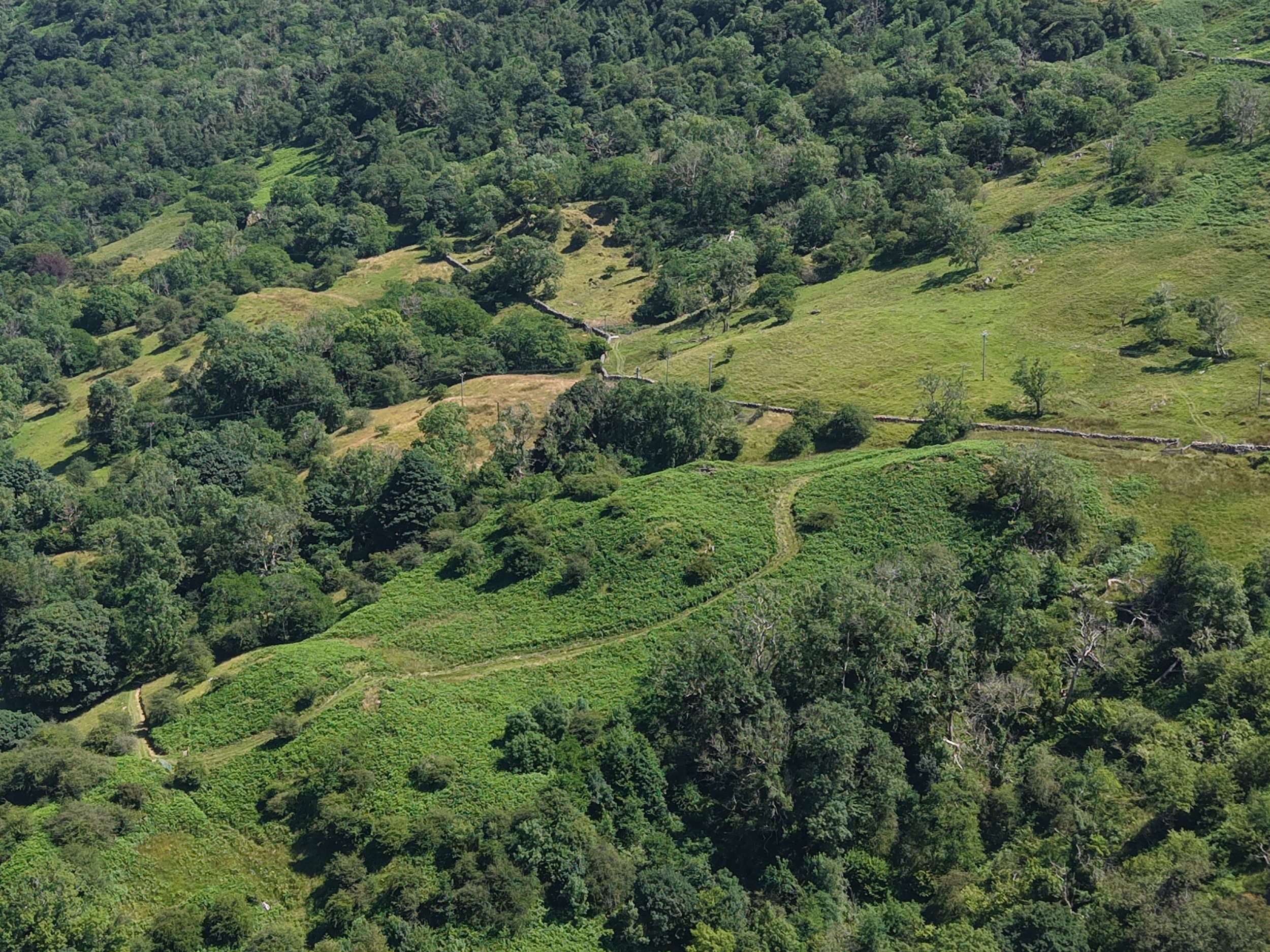
Modern conservation efforts have been underway here to restore the ecology: the ancient woodland, peatland and upland habitat mosaics.
A massive campaign was undertaken to remove rhododendron infestations and now we are seeking to restore temperate rainforests to the lower slopes of the valley on our farm, where vestiges of the ancient woodlands remain. Small numbers of cattle graze under plantings of the last few decades, allowing light into the understorey where lichens and bryophytes now flourish. Cattle also graze the uplands and help the grasslands regenerate there too.
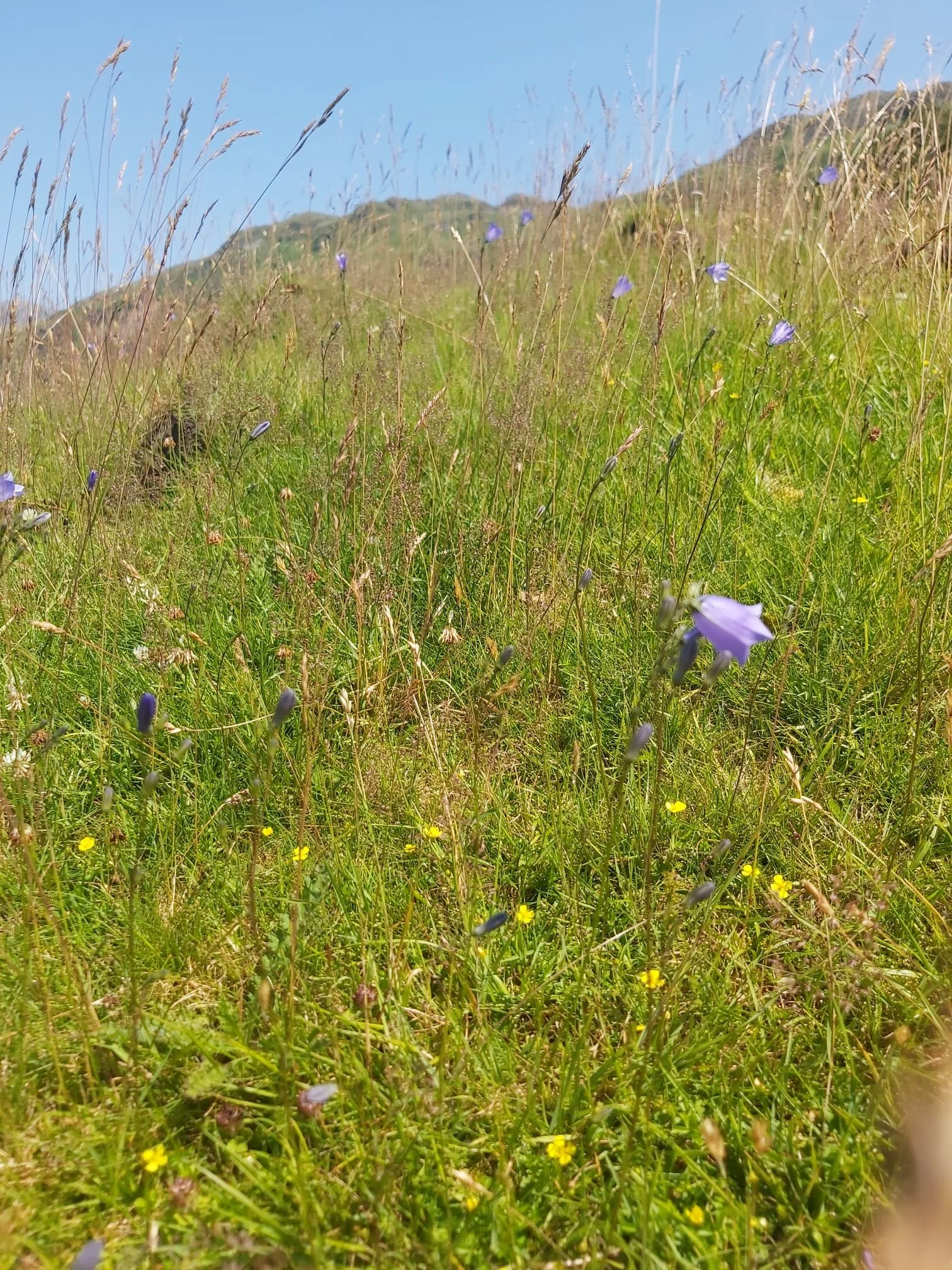
Positive indications of success are flowering grasses and herbs, the height of heather bushes, naturally regenerating trees and shrubs and the presence of cattle dung. The carbon stocks of habitats being restored will also be measured using a farm carbon calculator (FCC) to provide a baseline and estimate of future carbon sequestration as habitats change.
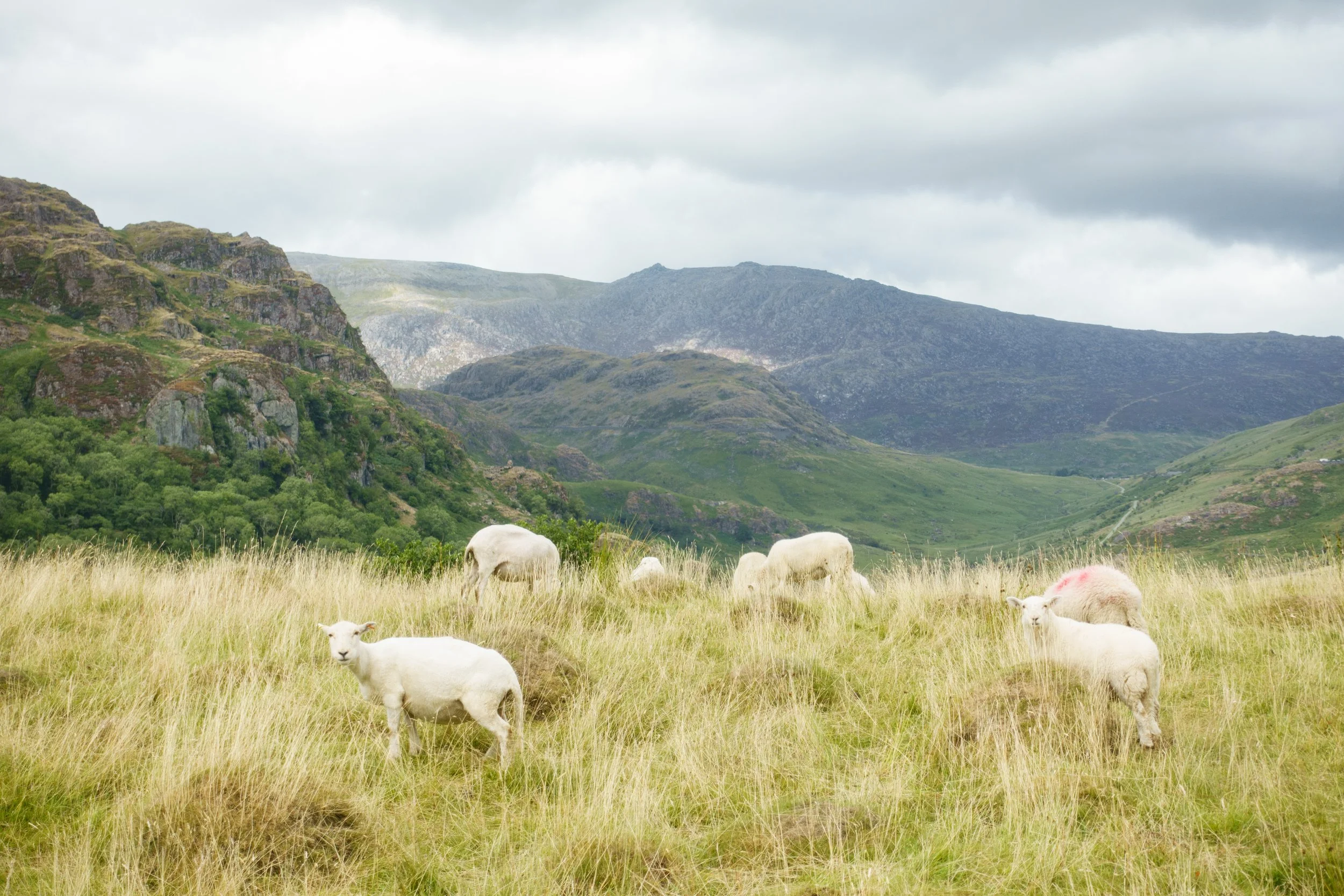
Since the early days of EU and Welsh Government environmental schemes, we have been active in protecting and enhancing the flora and fauna of the valley. Since the late 1990s over 100 acres of the farm have had sheep excluded, and the woodland has been restored around the remnants of ancient woodland with the planting of over 30,000 native trees — with further planting every year — alongside the removal of invasive rhododendron.
Restoring the woodland
-
All the stream gullies and ravines have been protected to preserve the unique lichens and bryophytes of the Celtic rainforest. With assistance from Objective One, Tir Gofal and Glastir funding, what were once barren, overgrazed slopes have been transformed into a mosaic of woodland, heath, mosses and peat bogs.
These areas now form part of the Coedydd Nantgwynant Site of Special Scientific Interest and the Meirionnydd Oakwoods and Bat Sites Special Area of Conservation. The campsite and the land north of the road lie within a second pair of designations — the Eryri SSSI and SAC — so the farm spans two of the most important protected landscapes in Wales.
-
Until recently, much of the Nantgwynant valley was threatened by invasive rhododendron (Rhododendron ponticum). The campsite and its surrounding farmland sat at the northern edge of an invasion spreading up the valley from Beddgelert, and for many years our efforts held the line against its expansion north and east.
The Celtic Rainforests Wales LIFE project, delivered in partnership with Eryri National Park Authority, has since brought rhododendron under control across the valley. Large areas that were dead ground beneath the light-excluding canopy of mature rhododendron are now being planted with native trees or left to regenerate naturally. Isolated plants still appear, and keeping on top of them is permanent work rather than a job that is ever finished.
-
More recently, ash dieback has become a serious problem here. Where the bedrock of Nantgwynant is less acidic, ash grows alongside oak and birch — and it is the ash that carries much of the valley's remarkable lichen flora, because its bark is base-rich and hospitable to species that will grow on little else. That is precisely why the disease is so damaging. Over half of our mature and young ash are already dead.
Ecologists working in the valley have identified sycamore as the most useful substitute. Its bark chemistry is close enough to ash to support many of the same communities, and it becomes suitable at a relatively young age. We are planting sycamore and encouraging the trees we already have — including an established grove whose lichen flora the surveyors singled out as worth extending.
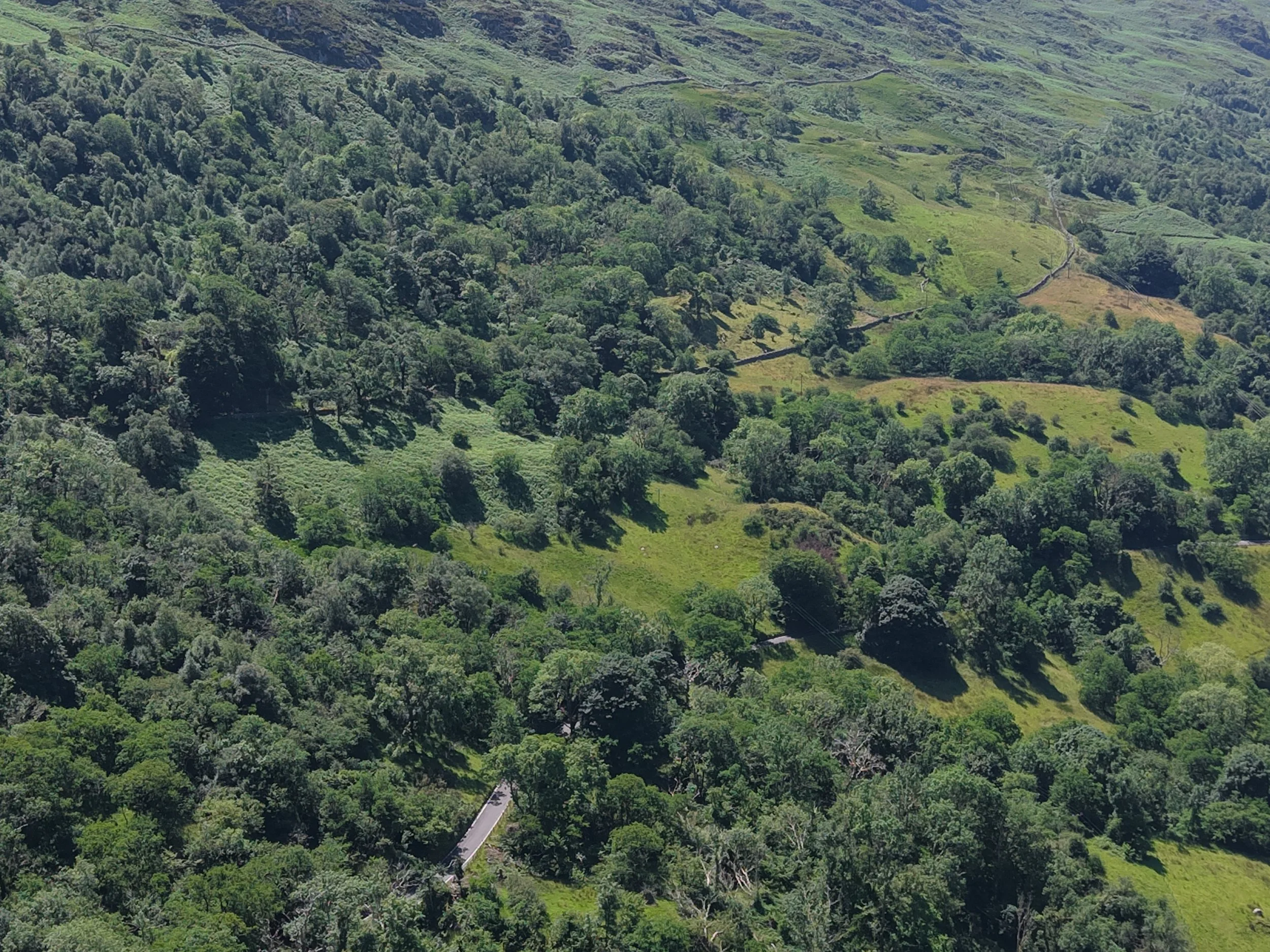
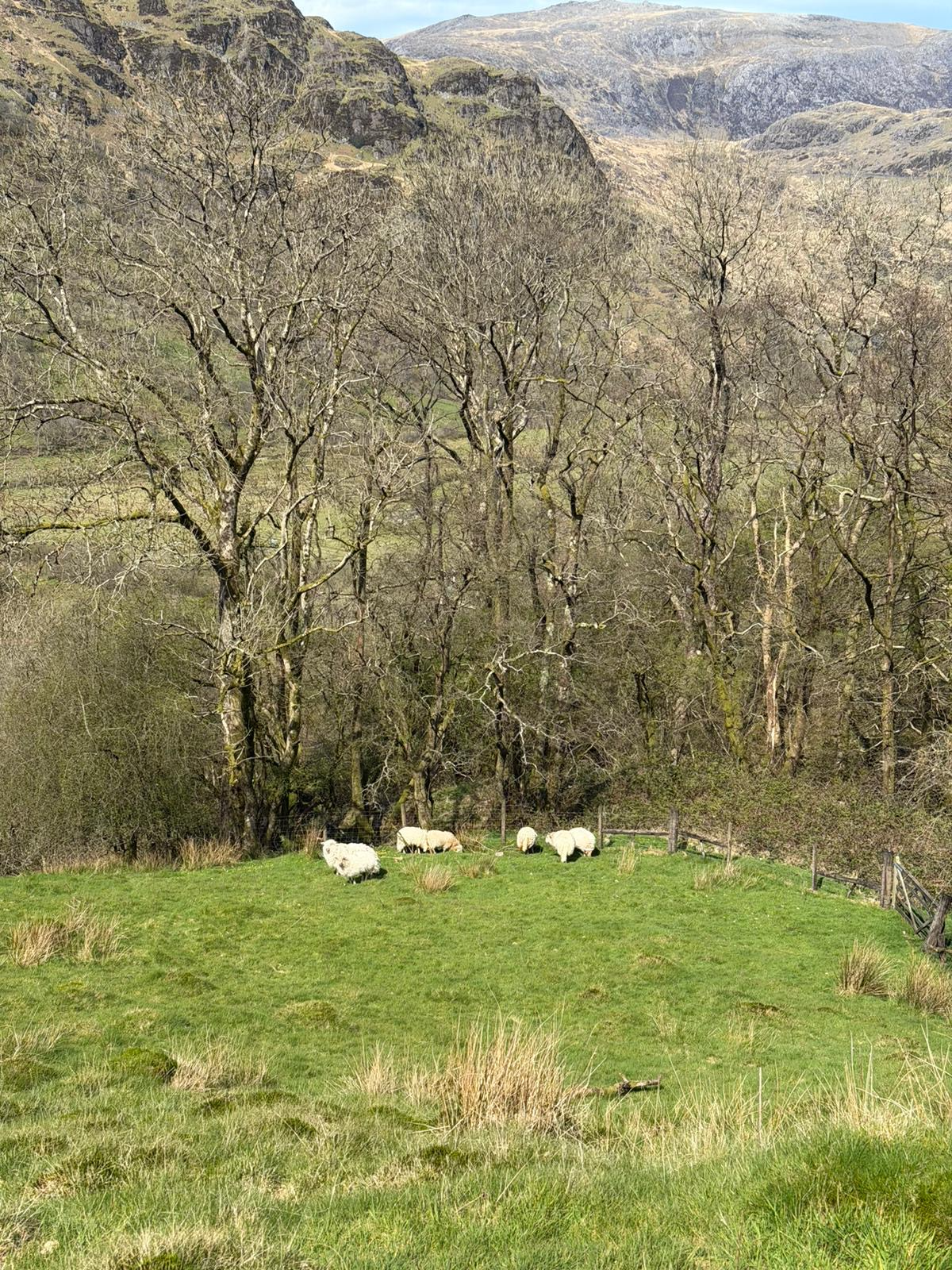
Regenerating woodland - a mix of ash, oak, alder and rowan - planted between 199 and 2005. The area is beginning to be dominated by natural regeneration, mainly birch. The A498 road can be seen in the bottom of the frame.
A valley of international importance
Recent surveys have confirmed just how significant this valley is. Specialists working here have recorded 217 species of lichen, more than forty of them nationally notable, and the wooded stream valleys support what is now considered the richest Atlantic woodland bryophyte assemblage of any SSSI in Wales. The site comfortably exceeds the national thresholds by which such places are judged.
Among the rarities is one small lichen with its only recent record anywhere in Wales comes from the farm.
These are not species most visitors will ever notice. They are the reason the valley matters.
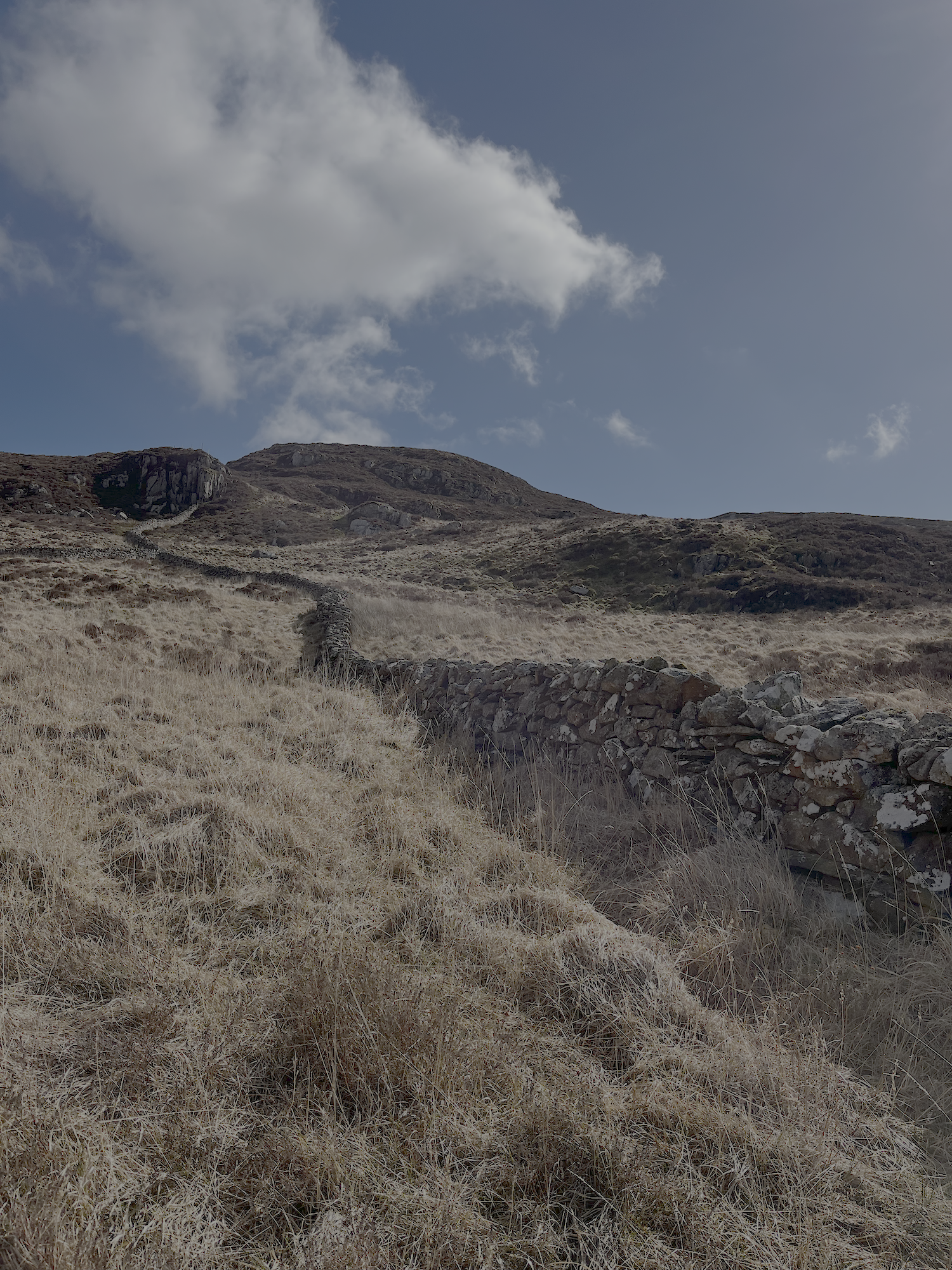
The upper boundary wall of Hafod Lwyfog farm was rebuilt under the Air Gofal (care of the land) scheme in the 1990s. The wall snakes to the top of the ridge overlooking the valley.
Light, bramble and conservation grazing
Many of the finest lichens grow on open-grown trees standing in good light rather than in closed woodland. And on the ground, as woodland matures, bramble and rank vegetation can build up over the boulders and rock faces where the mosses and liverworts live, smothering them just as effectively as any shade from above.
-
Observing the lichen growth taught us something. Fencing the ravines protected them from overgrazing, which was the right first step - but total exclusion of livestock allowed the undergrowth to thicken until it began to threaten the very species the fences were meant to protect. Ecologists surveying the site reached the same conclusion independently: a light touch of grazing does more good here than none at all.
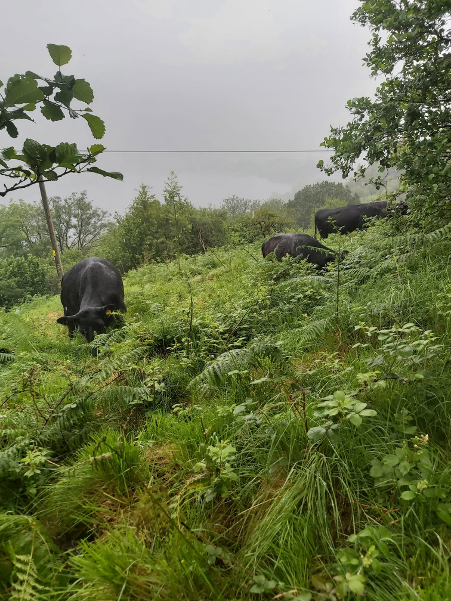
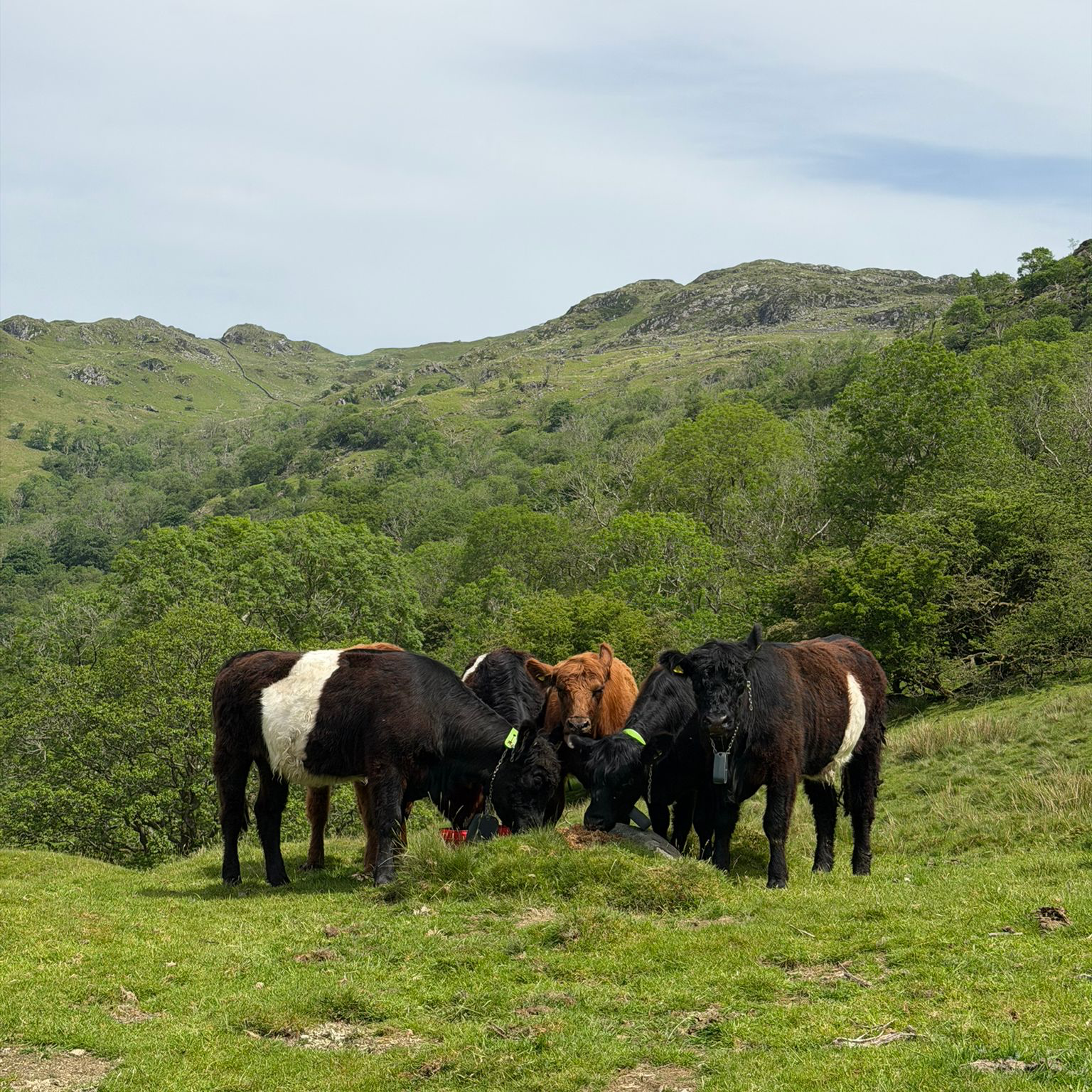
So our woodlands are now selectively grazed by small cattle, fitted with virtual-fencing collars that let us move them to the areas where bramble and thick undergrowth need controlling, without putting up a single new fence. The timing has to be judged carefully so that regenerating seedlings are not damaged. A full-time farm manager works on site to run the livestock and the conservation grazing programme, and we keep our own herd of Galloways and Whitebred Shorthorns, with a bull to breed our own replacements.
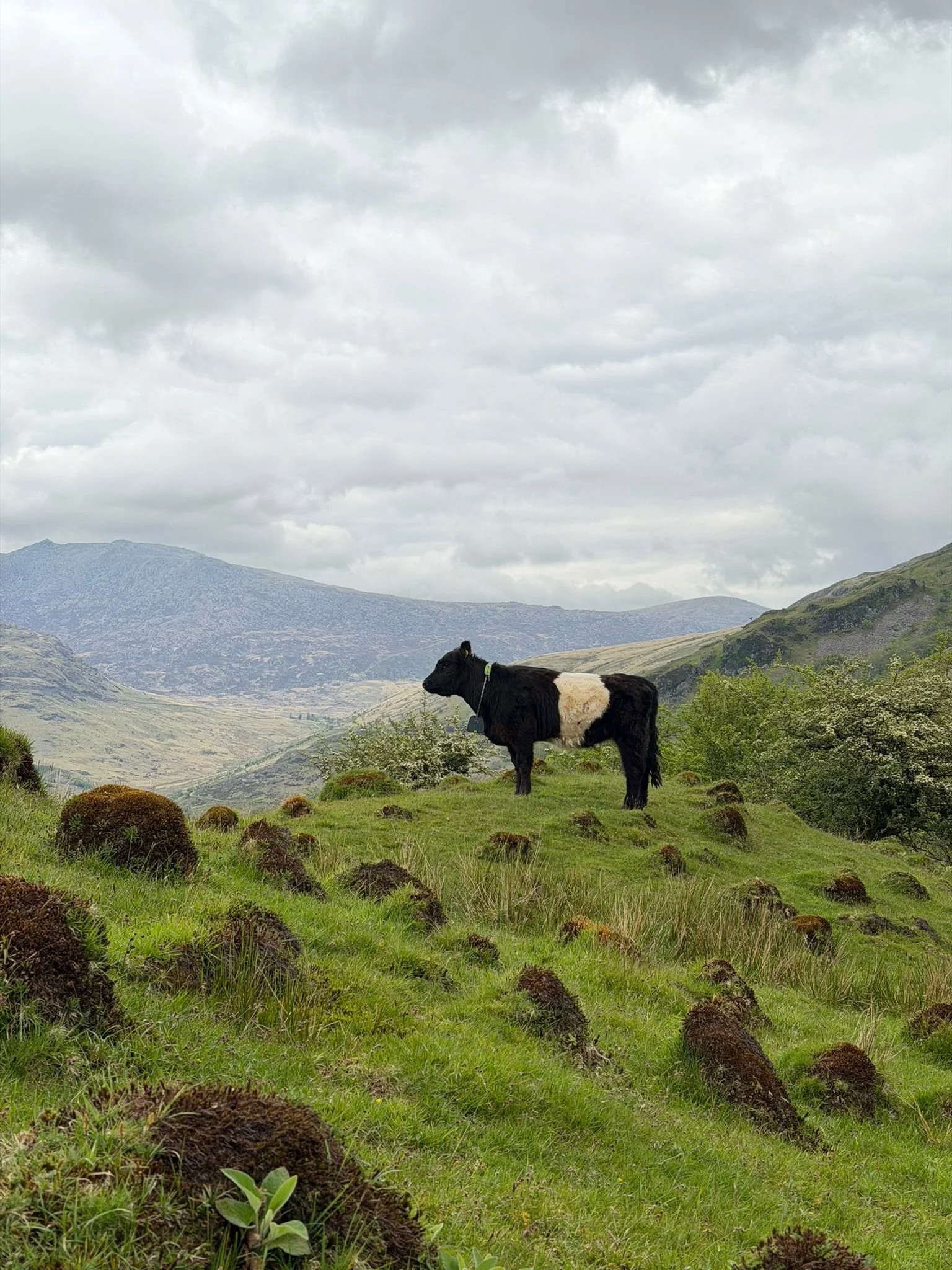
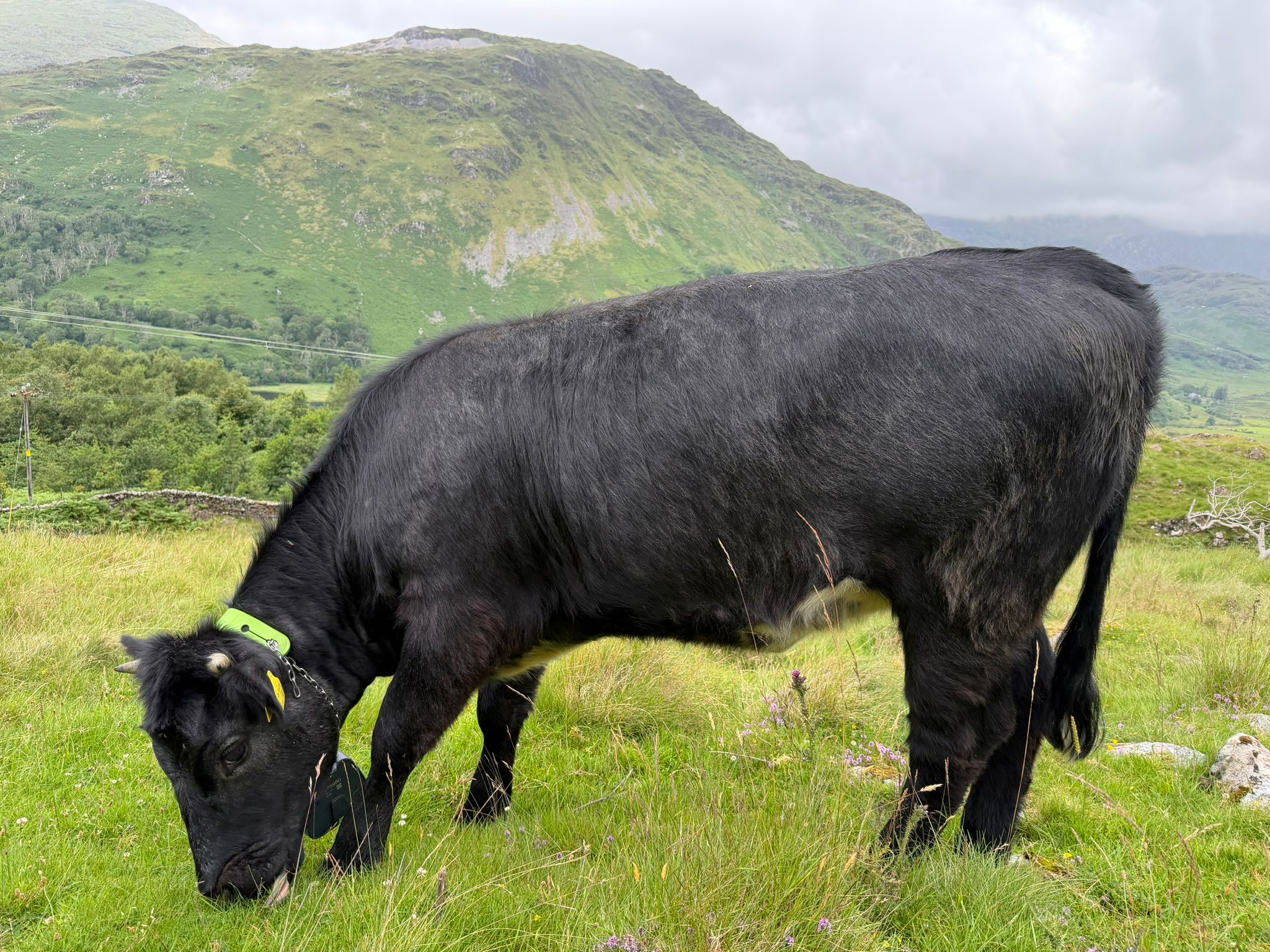
One of our belted Galloway herd – their small size means their hooves do less damage in our wet conditions. In the foreground is an area of many natural anthills covered in sphagnum moss.
Campsite and farm working hand-in-hand
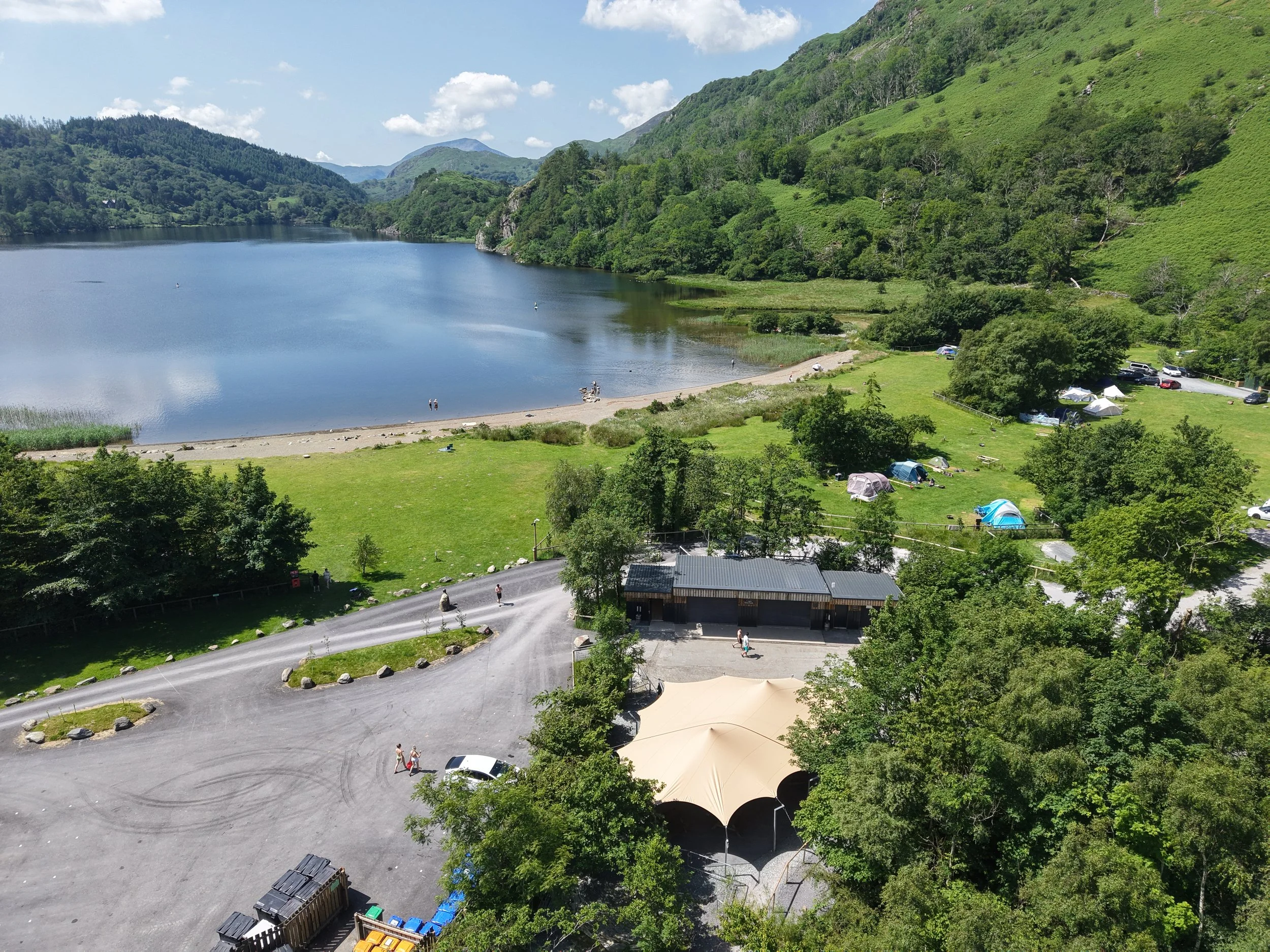
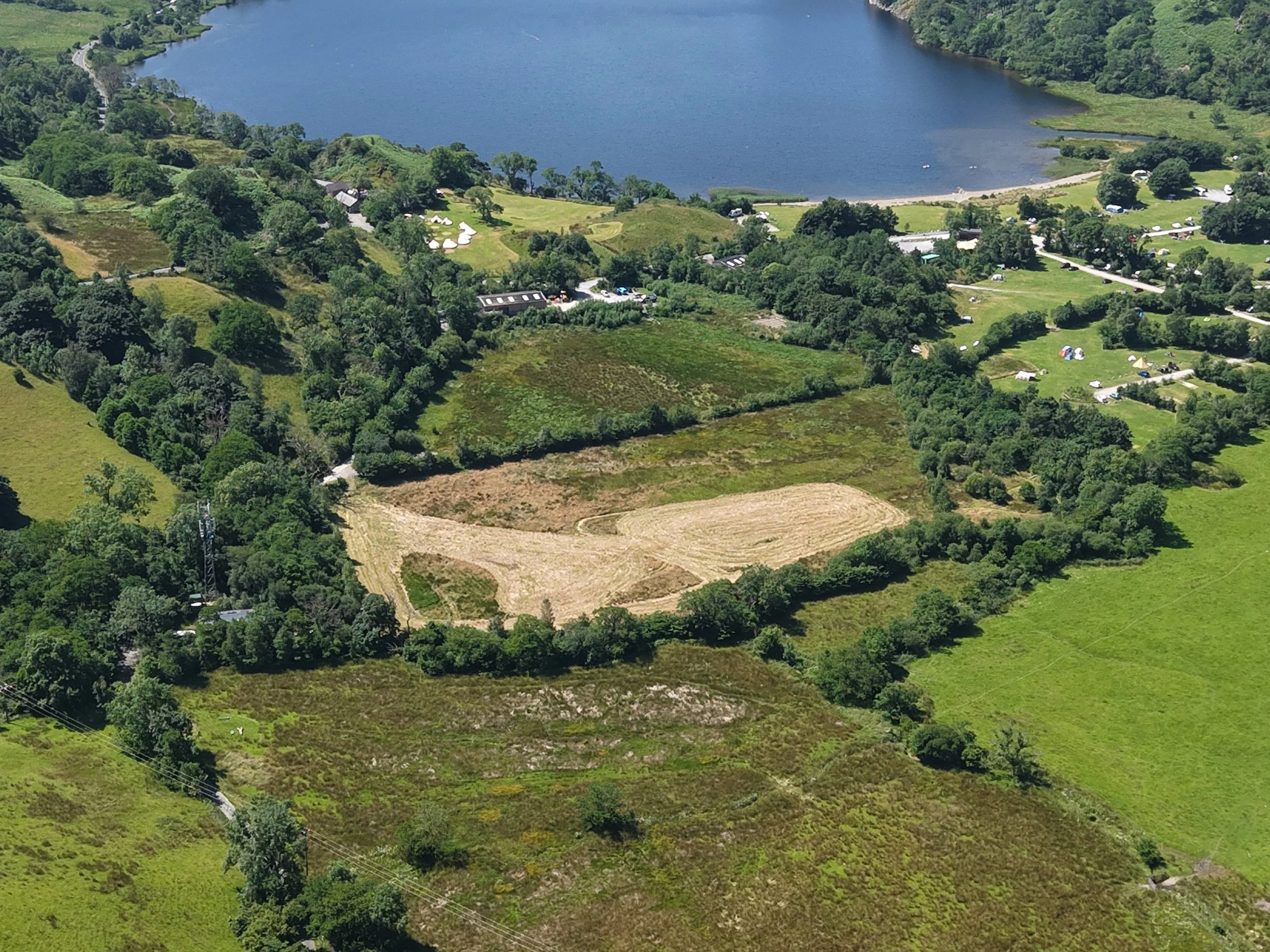
There are many synergies between the farm and campsite. Our in-ground effluent disposal of effluent means up to two cuts of hay can be made in the fields adjacent to the campsite which goes to feed our cattle in winter.
-
Spent brewers gain from our Bagdy (brewery) is added to silage to provide excellent winter nutrition of cattle.
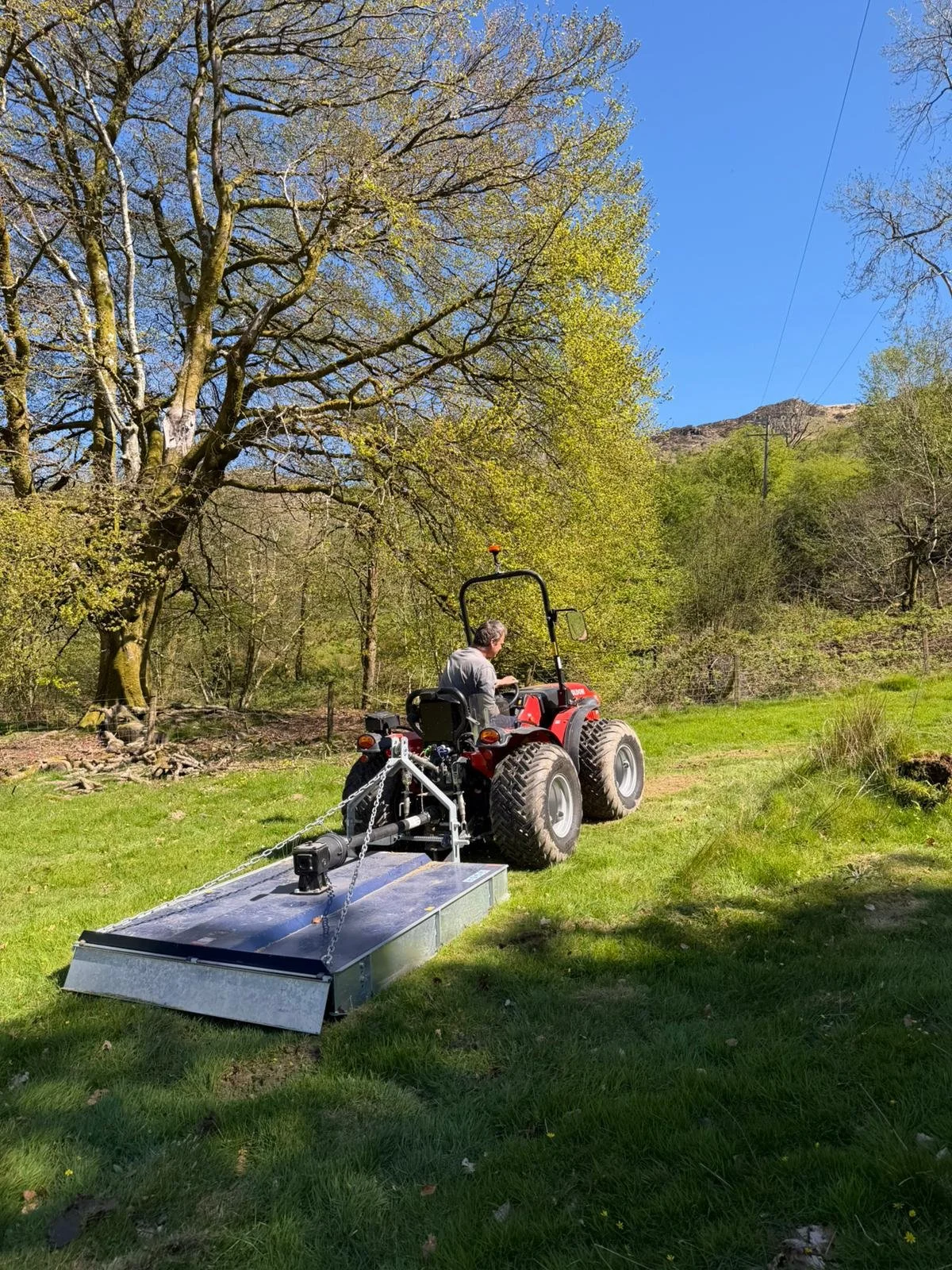
Machinery such as tractors, movers, diggers and quad bikes can be shared between the Campsie and farm according to seasonal demands, and wardens who look after campers in the summer season work on fencing, walling and woodland projects during the winter when the campsite is closed.
We are active participants in, and supporters of the new Sustainable Farming Scheme introduced by the Welsh Government in January 2026 that aims to replace the old Basic Payment Scheme of subsidies that are being phased out. At long last the aims of the SFS align with our own aims for the farm, with the benefits of conservation , woodlands and sustainable farming being recognised. No longer are we penalised as under the old BPS for taking areas out of grazing,
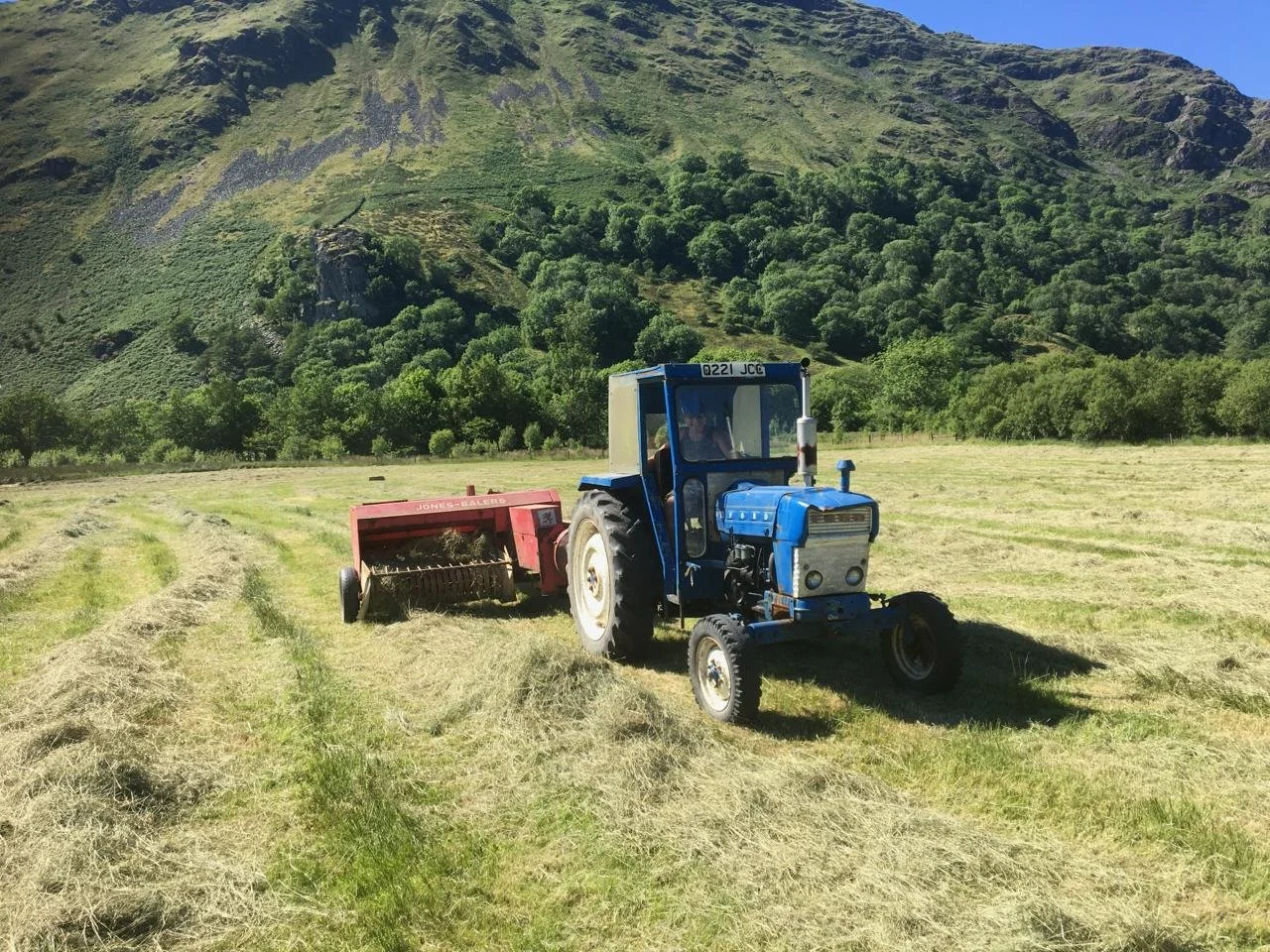
Photo: Haymaking in the effluent dispersal field on the campsite.